
Power Washing in Salem, Oregon for Concrete, Pavers, Block Walls and Business Flatwork
Power washing in Salem is the heavy end of the work, kept for concrete, pavers and other hard ground. Within that, a paver patio and a shop entry still get different settings. Siding and roofs, by contrast, belong to gentler pages.
Checked 11 October 2026 against the National Park Service masonry brief, Oregon DEQ wash water practices and McNary Field normals.
Four short answers on force, cost and runoff
This page keeps to hard ground. The Salem pressure washing hub covers the whole lot, roof and walls included.
What does power washing mean on this page?
Full pressure on hard ground, delivered through a rotating surface cleaner. Poured concrete, sound stone and dense block can take that force, so they get it. Pavers take lighter passes, since their joints hold sand. Anything painted, shingled or wooden moves to a soft wash below 500 PSI instead.
How much does concrete power washing in Salem cost?
Two cars of driveway cost $150 to $250, and a whole lot of flatwork costs $300 to $500. Between those two sits a drive, walks and patio bundle at $200 to $350. Storefront frontage, meanwhile, runs $250 to $600. Because Salem rides the valley route, none of those figures carries a trip fee.
Which surfaces should never get full force?
Siding, painted trim, shingles, soft stone and old brick stay off the full-force list. Soft stone and some brick etch under very high pressure, according to the National Park Service. Painted surfaces also shed chips under force, which DEQ wants kept out of drains. Those surfaces get a soft wash under 500 PSI.
Does a business lot get the same treatment as a house?
The method matches, but scope and timing change. Business flatwork prices by frontage, foot traffic and access hours rather than by slab count. Grease by the bins and doors gets degreaser, then time to soak. The commercial page for Salem holds the storefront and parking detail.
What does concrete power washing in Salem include?
Concrete drives and pads, paver areas, dense block walls and business flatwork. Each surface gets a dry sweep before any water touches it. Degreaser then goes onto oil, and the rotating cleaner follows in overlapping passes. A last rinse pushes the grit toward lawn or beds rather than the street.
- Poured concrete. Drives, garage pads, RV pads and long walks take the full setting, because dense concrete shrugs off force.
- Pavers and flagstone. Passes run lighter here, so the sand in each joint stays where the installer put it.
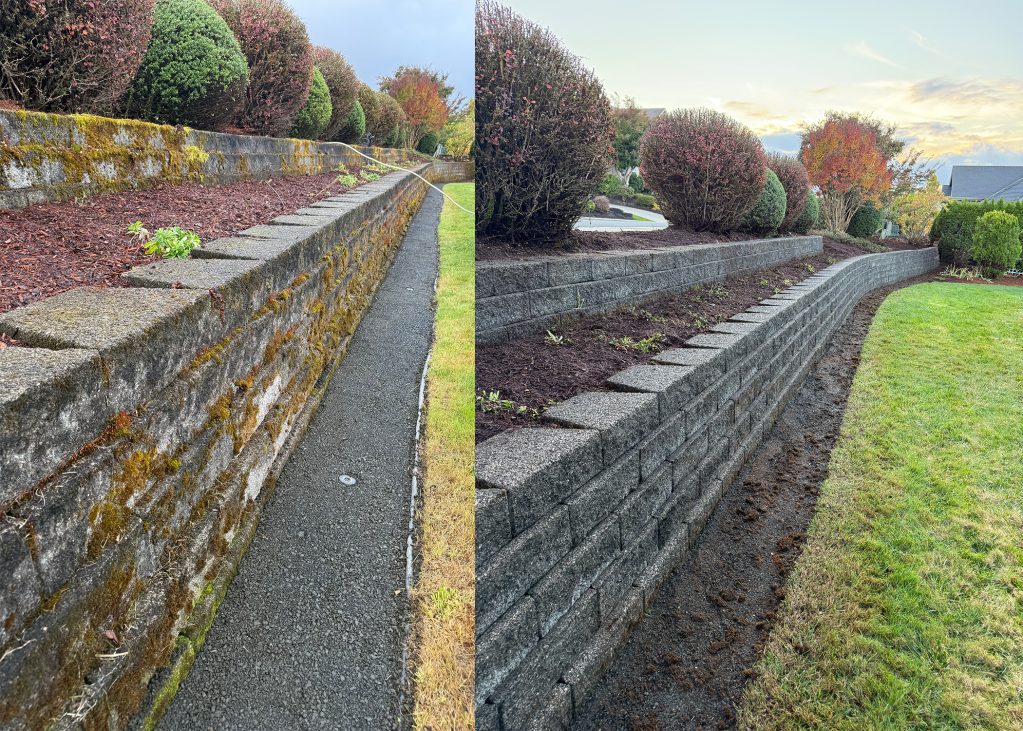
- Block retaining walls. Moss and grime lift off sound block, as the photo above shows, while crumbling block waits for a mason.
- Business flatwork. Entries, walkways and parking pads follow the commercial scope, since access hours shape the day.
- Oil and grease. Degreaser soaks in first, then the surface cleaner lifts what it loosened, although old stains may only fade.
For a single surface, the driveway page, the concrete cleaning page and the patio page go further.
Why does power washing in Salem stop short of old brick and soft stone?
Because too much pressure wears masonry away faster than it cleans it. A National Park Service brief on cleaning historic masonry ties that damage to power washing and water blasting. It warns that such pressure can etch marble, other soft stones and some brick. Any older brick on a Salem lot therefore gets a gentler plan.
The brief therefore sets a low starting point. Washing should begin at 100 psi or below, even with a garden hose. Pressure then rises only as needed, and generally no higher than 300 to 400 psi.
It also names a warning sign worth knowing. Grains of stone or sand in the runoff suggest the pressure may be too high. That grit is a reason to lower the setting straight away.
Sound concrete block, the kind in the photo above, takes more force than old brick. Even so, any wall of unknown age starts low, as the brief advises testing gentle methods first.
What does Oregon DEQ say about washing near paint and pavement?
DEQ wants paint chips and metals kept out of drains, partly by turning water pressure down. Its 1998 practices also call for dry sweeping before anyone washes paved areas. Soapy wash water belongs in the soil, never in the storm system. The soap itself should carry no phosphate and should biodegrade fast.
On a Salem lot, that guidance shapes three habits. Painted curbs, posts and parking lines get a lower setting near the paint. Loose grit goes into a bin before the first pass. Afterwards, rinse water heads to lawn or beds rather than the street.
The DEQ washing practices run to four pages, so they make a quick read before you hire anyone. Any bidder should also be able to name the spot where the rinse lands.
Which months suit power washing in Salem on concrete and pavers?
Late spring to early autumn, when slabs dry quickly and nights stay above freezing. From June through September, the McNary Field normals record no freezing lows at all. July brings just 0.25 inches of rain, spread over 2.3 days. December, however, averages 11.9 days with a low at or below freezing.
| Month at McNary Field | Inches of rain | Days with rain | Days with a low of 32°F or less |
|---|---|---|---|
| January | 6.08 | 18.2 | 11.0 |
| March | 4.35 | 17.5 | 6.3 |
| May | 2.25 | 11.6 | 0.2 |
| July | 0.25 | 2.3 | 0.0 |
| August | 0.39 | 3.2 | 0.0 |
| October | 3.47 | 12.5 | 1.4 |
| December | 6.97 | 18.9 | 11.9 |
Frost matters for flatwork, because a wet slab can freeze before it dries. Across a year, Salem logs 49.4 such days, and 33.1 of them fall between December and February. Figures come from the monthly and annual 1991 to 2020 normals.
Power washing prices in Salem for hard surfaces
Every figure below comes off the valley price list, so a Salem address pays what a Corvallis one does.
| Surface | Price | What moves it |
|---|---|---|
| Two-car driveway | $150 to $250 | Higher when old oil covers more of the slab |
| Drive, walks and patio together | $200 to $350 | Rises with slab count |
| All flatwork on one lot | $300 to $500 | Goes up with the total area |
| Storefront frontage | $250 to $600 | Rises with frontage and foot traffic |
Block walls and paver areas get their own written figure at the walk-round. Book a second service on the same day, and the bundle discount opens at 10%, climbing as far as 25%. Curious why a band sits where it does? The reasons fill the Oregon cost guide.
A hard-surface visit in Salem, step by step from sweep to rinse
Five stages repeat on every slab, since the order never changes.
Clear it dry
Grit and fallen leaves go into a bin first, collected by broom or blower.
Cover the inlets
Street inlets nearby get a cover, then the crew picks the lawn or bed for the rinse.
Let degreaser work
Oil and grease get degreaser first, and it sits for a while before the next pass.
Run the rotating cleaner
Overlapping passes cross the slab, although pavers get a lighter touch.
Rinse and inspect
Grit rinses toward soil, and then you look over the surface with the crew.
Time on site depends mostly on square footage and old oil. Larger flatwork jobs, by contrast, can fill much of the day.
Who should book this work, and who should not?
Book it for sound concrete, paver areas, block walls and business flatwork that look dirty or green. Skip it for cracked or heaved slabs, crumbling mortar and loose pavers. Water cannot mend those, while force can make them worse. Repairs come first, so the cleaning waits for them.
A good fit:
- Owners of long drives, RV pads or wide walks, since flatwork rewards full force.
- Shops and offices with entry paving, because the commercial scope fits around opening hours.
- Anyone with a block wall gone green, when the block itself is still firm.
A poor fit:
- Old brick or soft stone, which needs a gentler plan from the start.
- Sealing, crack repair or paver re-laying, since GreenTree offers none of them.
- Painted siding or roofs, because the Salem hub covers those at low pressure.
Seven things on a Salem slab or wall: what the free quote checks
Seven readings decide each written figure, so no two slabs price alike.
- Material and finish. Force differs between plain concrete, exposed aggregate, pavers and block.
- Area. Total square footage sets the base, so long drives cost more than short ones.
- Stains. The quote names any mark likely to lighten rather than lift.
- Joint sand. Low joints on pavers get a note before any pass.
- Wall condition. Loose caps or crumbling block mean a mason comes first.
- Paint nearby. Painted curbs or lines call for a lower setting beside them.
- Drains and access. Inlets, slope, truck parking and business hours all shape the plan.
Which pages cover the softer work and single surfaces?
The Salem hub covers the whole lot, including walls and roofs at low pressure. Single-surface pages go further on driveways, steps, patios and business sites. Each page keeps to its own surface, so nothing repeats. Nearby, Springfield also has a power washing page of its own.
Roof, wall and gutter prices live on the Salem pressure washing hub. For one surface, see driveway cleaning, concrete cleaning or patio cleaning in Salem. Business lots belong on the commercial Salem page, while Springfield has its own power washing page.
What customers say
5.0 on Google. Read them all →
My driveway and back patio had not been cleaned in years. Both were so bad they looked black. By the time Green Tree was done both looked almost brand new. I would highly recommend and will use them again in the future.Diane M.
These guys are awesome, great attitude and I was completely impressed with the job they did at my new house. Will definitely be using them again and again.Jeff M.
Eight questions on force, paint, walls and runoff
Short answers for owners and managers of Salem hard surfaces.
Is power washing different from pressure washing?
The words overlap, and plenty of people use them for the same job. On this page, power washing means full pressure on hard ground through a rotating cleaner. Softer work on siding and roofs sits on the Salem pressure washing hub instead. Either way the water stays cold, and oil gets degreaser.
Can power washing damage Salem concrete?
Sound concrete handles full pressure well while a rotating cleaner keeps passes even. A bare wand held close, however, can leave stripes or scar the surface. Cracked, flaking or heaved slabs need repair first, because force widens damage. The walk-round flags any slab like that before a price appears.
Can power washing go near painted curbs and parking lines?
Yes, but the setting drops beside the paint. Oregon DEQ asks washers to limit loose paint chips, partly by reducing water pressure. Chips that do come away get swept up, so they never reach a drain. Repainting worn lines, however, falls outside the service.
Can you power wash a block retaining wall in Salem?
Yes, when the block is sound and the wall drains well. Moss and grime then lift off the face, as the photo on this page shows. Crumbling block or loose caps, however, need a mason first. The crew covers planting beds behind the wall before any spray starts.
Why does flatwork turn slick in winter?
Rain and short days keep slabs wet for weeks at a time. McNary Field normals give 17.59 inches of rain from December to February, across 53 rain days. Green film settles on that damp surface, so walks turn slippery. A summer wash lifts the film before the wet months return.
Do business lots need a special scope?
Usually, yes. Business flatwork often carries gum, grease near bins and heavy foot traffic. Access hours also shape the plan, because entries need to stay usable. The commercial Salem page explains frontage pricing, from $250 to $600. Start there for a shop or office.
Where do the grit and rinse water go?
Grit comes off dry first, with a broom or blower, and goes in a bin. Lawn or beds then drink up the rinse. That follows the Oregon DEQ line that soapy water should end up in soil. Nearby street inlets get a cover while the work runs.
Does GreenTree carry insurance for Salem power washing?
Yes. Should a slab job ever damage property, GreenTree carries general liability cover of $2 million. Crew members on your concrete also work under workers compensation. The certificate shows both. Note that #2424331-91 is a state business registry entry, so it licenses no trade.
Ready to price your concrete or pavers?
List the slabs and walls you want cleaned, and each one comes back with its own figure. Most hard-surface jobs then fit within a week or two.
GreenTree Services, 1460 NW Van Buren Ave, Corvallis, OR 97330 · (971) 280-2861 · Oregon Registry #2424331-91
Sources: National Park Service Preservation Brief 1 on cleaning masonry (PDF). DEQ PDF, washing activities. McNary Field month-by-month normals. McNary Field yearly normals. Verify Registry #2424331-91.