
Pressure Washing Before and After Photos From Real GreenTree Jobs
These before and after photos of our work come straight from the GreenTree Services media library, with no stock images. Each caption says only what the frame shows: the surface, its condition and the visible change. Only one photo has a confirmed town, a Corvallis sidewalk, so the rest carry no city name. Below the gallery, a short guide explains what an honest before and after photo should show for each surface.
Every caption below matches its photo as of 1 October 2026, and each source link also opened that day.
On this page
What should you know before reading these photos of our work?
First, three short answers cover what the frames show, where they come from and how to use them. Most of the work in these photos follows the method set out on the Oregon pressure washing hub.
What do these photos of our pressure washing work show?
They show real GreenTree work across sixteen photos, from driveways and decks to siding and gutters. Most frames set a before view beside an after view of one surface. A few show a single moment instead, such as a fence mid-wash. Each caption then describes only what the frame itself shows, nothing more.
Which Oregon towns do the photos of our work come from?
Only one photo has a confirmed town: the sidewalk pair, taken in Corvallis. No other photo has a confirmed town. Their captions and image data therefore say Oregon and stop there. That choice keeps a photo from implying work in a city it never saw.
Can I see a photo of a job like mine before booking?
Yes: find the gallery group that matches your surface, then open its service page. Each group then links to the page that explains the method and the published price range. If nothing here matches your surface, describe it when you ask for a quote. After all, the gallery is a guide to surfaces, not a catalogue of every job.
Which surfaces appear in these before and after photos of our work?
The photos sit in groups by surface, so each group can link to its own service page. Captions flag anything that makes a pair harder to judge, such as a wet half or a changed angle.
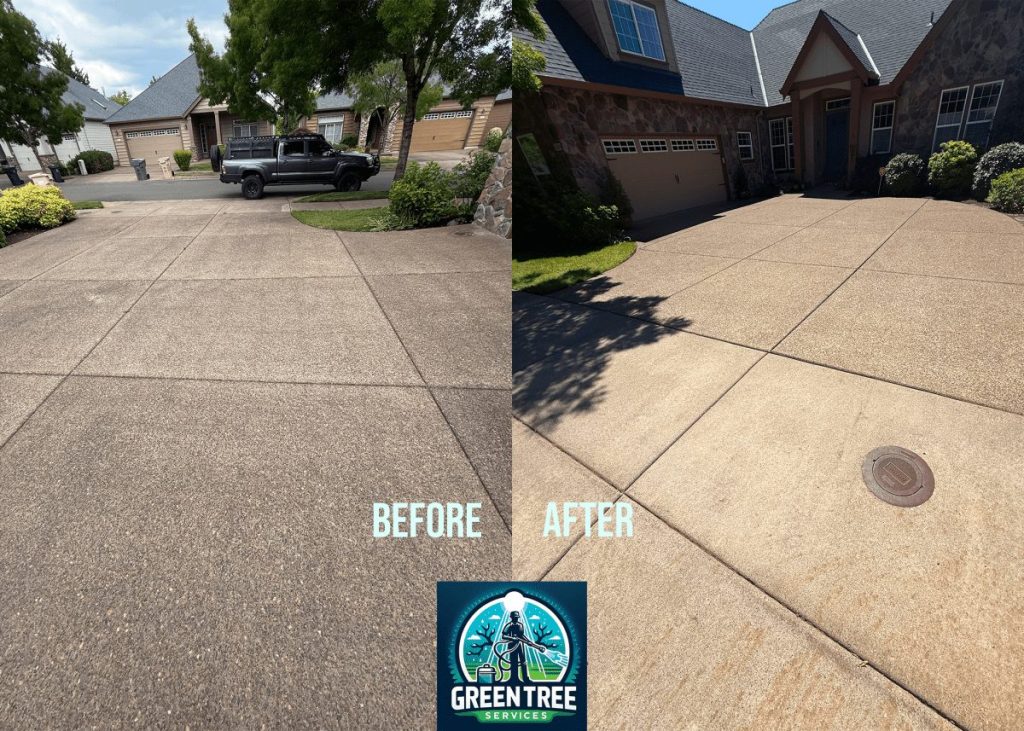
Photos of our driveway, patio and path work
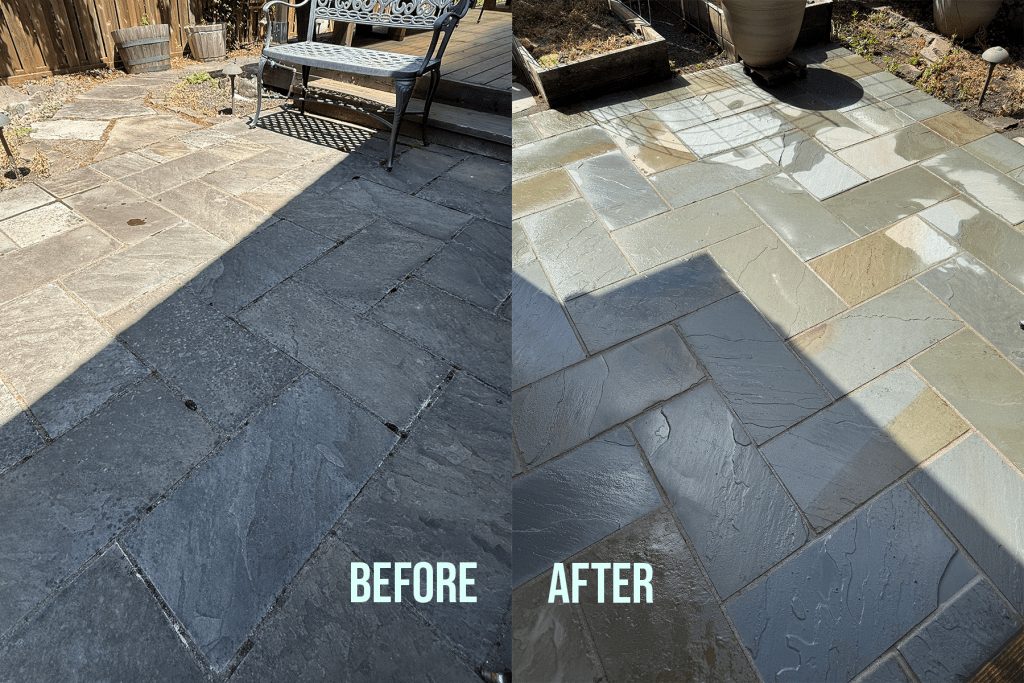
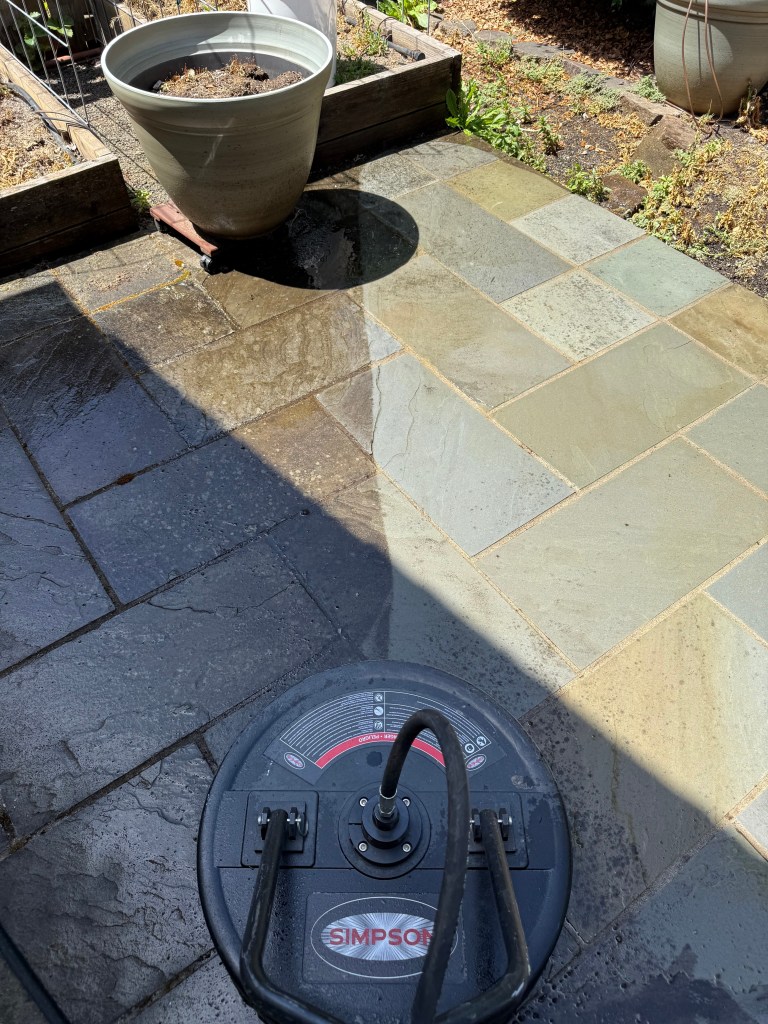
Concrete and stone make up most of the gallery. Pavers and natural stone get a gentler setting than bare concrete, which can take full pressure. The driveway and concrete cleaning page covers both surfaces, with prices.

Photos of our Corvallis sidewalk work
The sidewalk pair is the one photo with a confirmed town. Sidewalk work has its own sidewalk cleaning page, while local jobs sit on the Corvallis pressure washing page.

Patio and retaining wall photos: our moss removal work
Moss grows where hard surfaces stay damp and shaded, especially through the wet months. On patios and walls, the crew removes it and then rinses the surface clean. The Oregon moss removal guide explains roofs, walks and walls in turn.
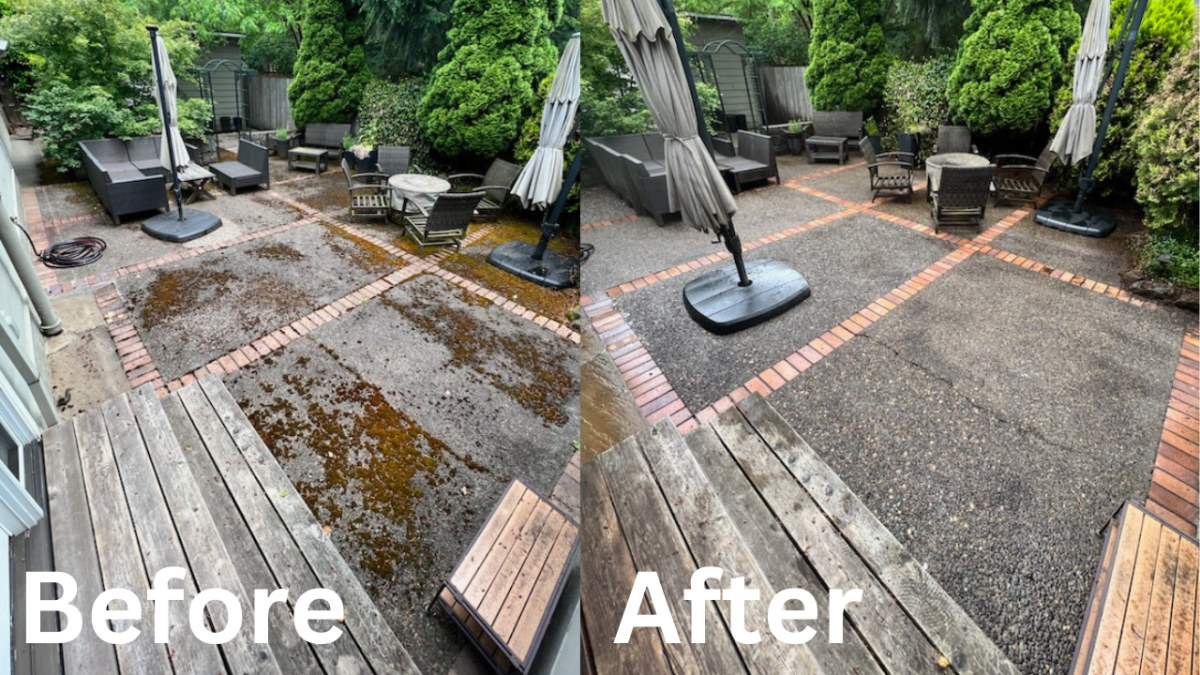
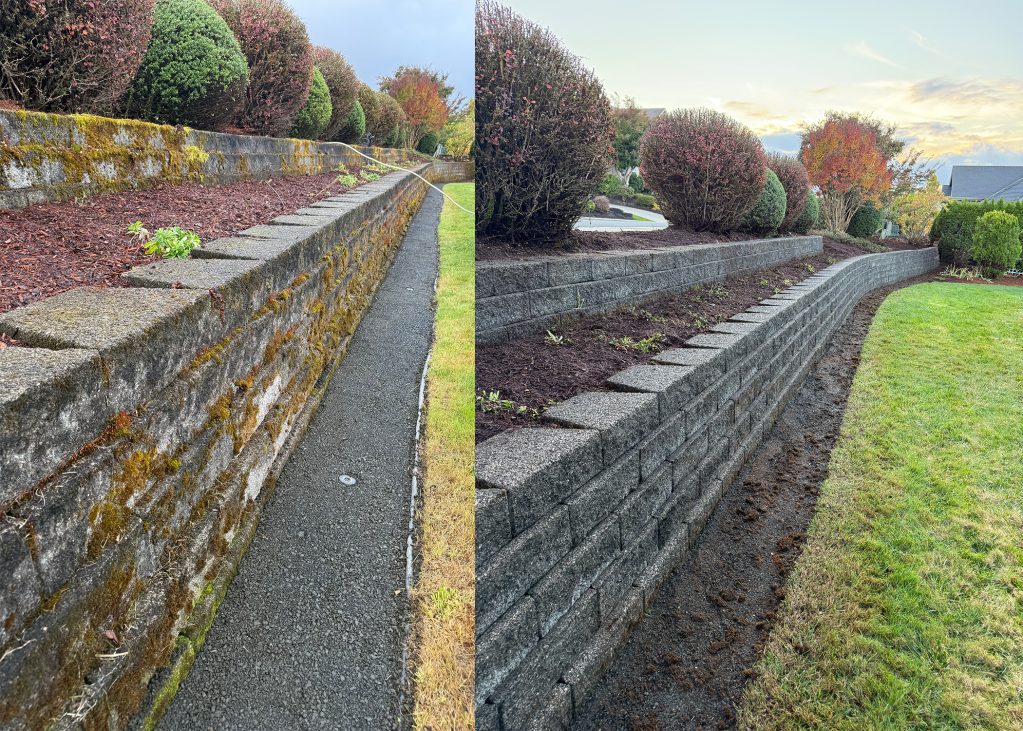
Photos of our deck, stair and fence work
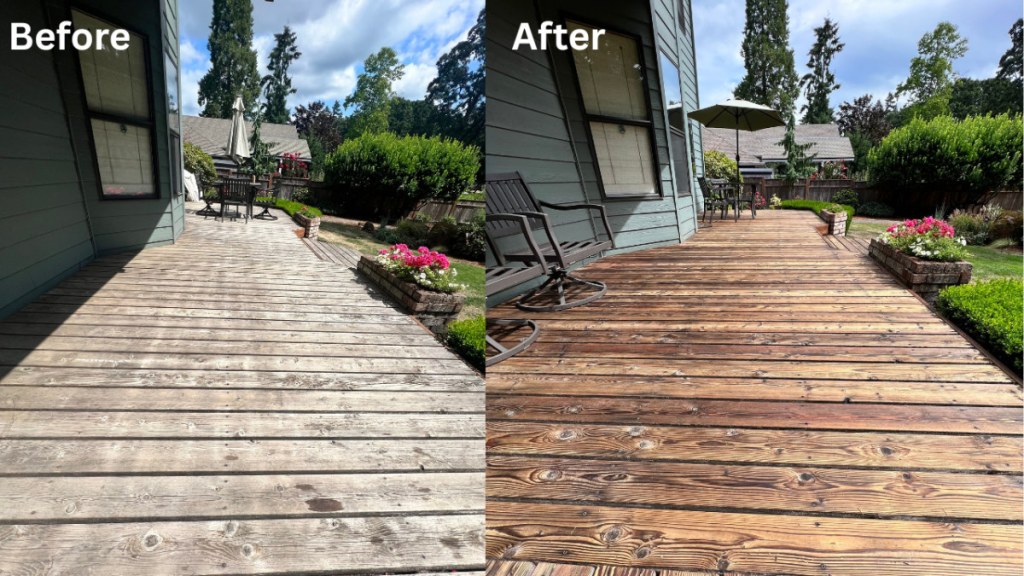
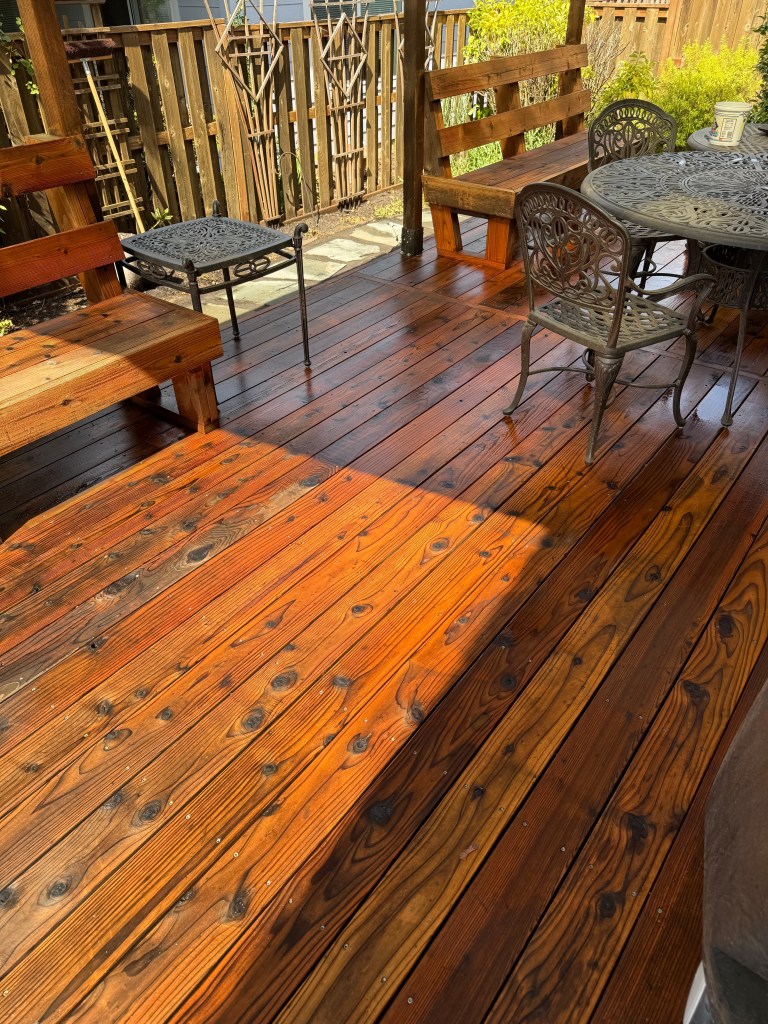
Wood shows the biggest color change of any surface in a before and after photo. Decks and fences therefore get a low-pressure clean that follows the grain of the boards. The deck and fence cleaning page also covers staining once the wood has dried.


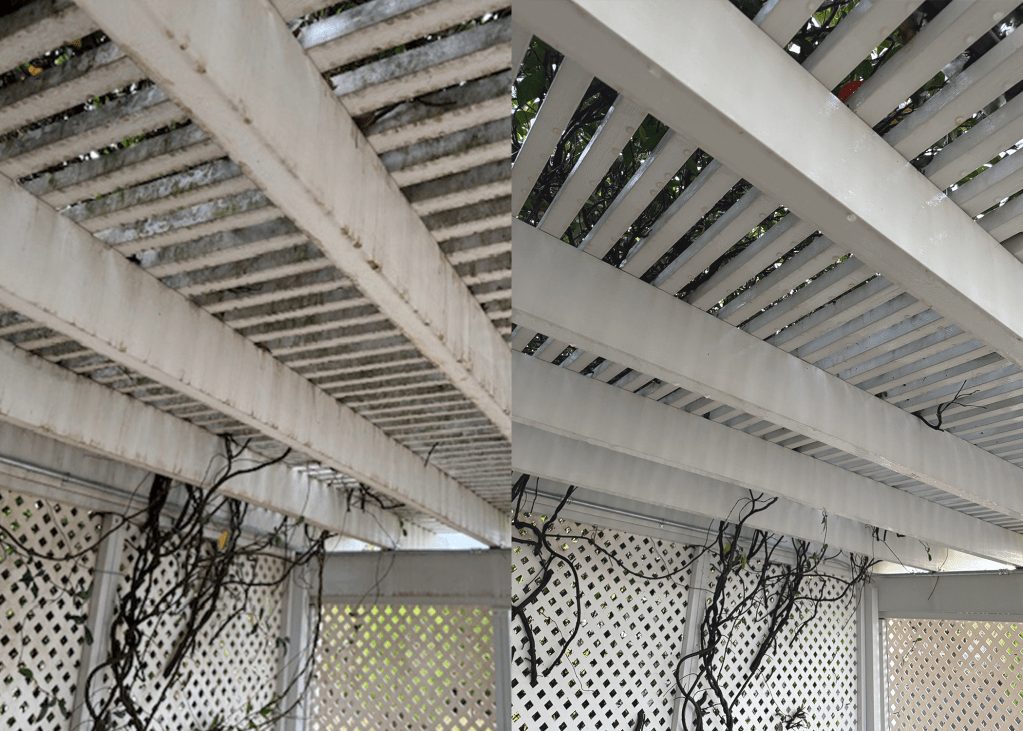
Photos of pergola and arbor work
Overhead slats collect streaks and film that show clearly from below. Neither structure has a service page of its own, so the nearest match is deck and fence cleaning.

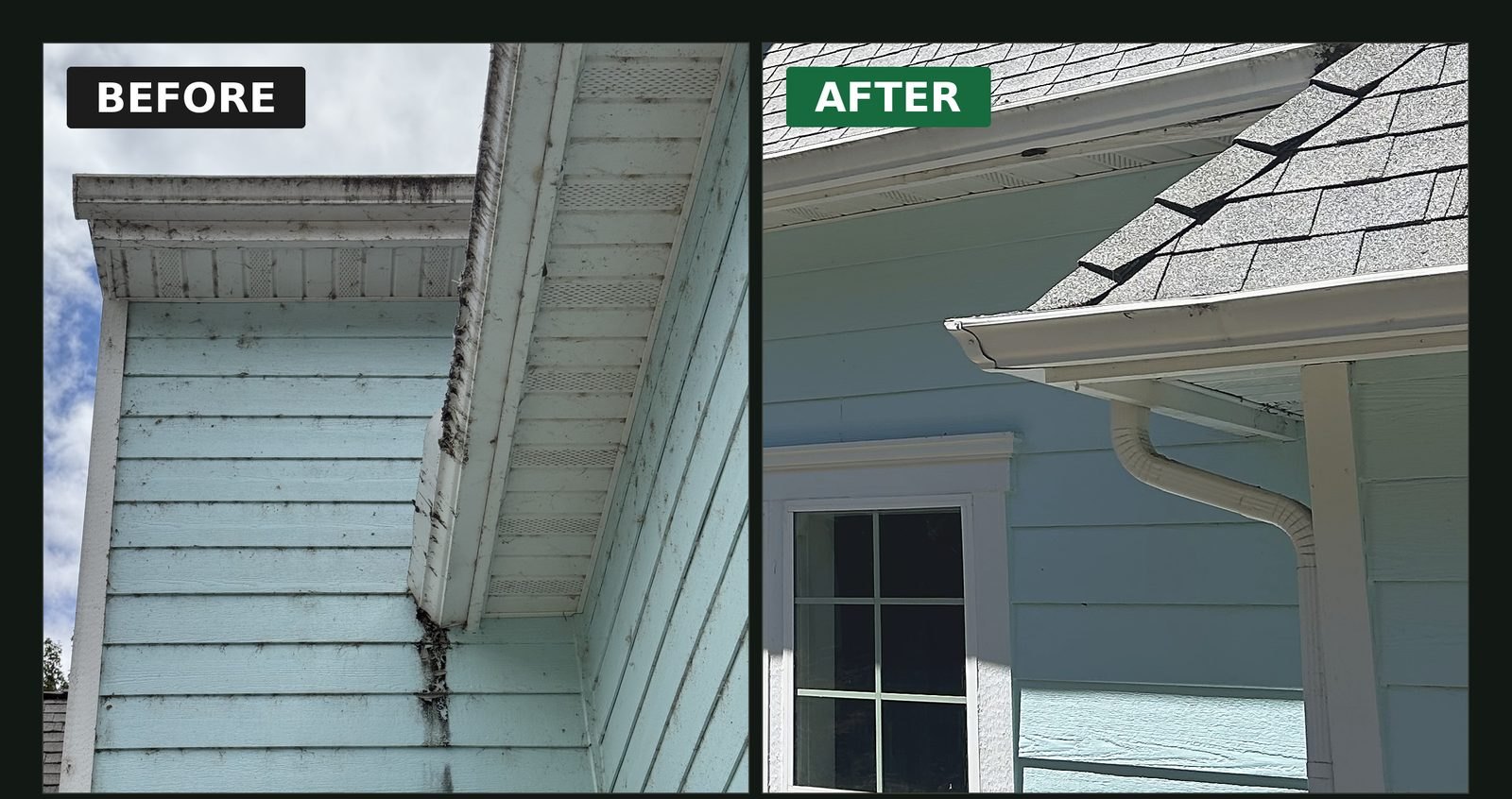
House washing photos: our work on siding and eaves
Siding and eaves get the gentlest treatment in the gallery. Because laps and paint film harm easily, the Oregon house washing hub keeps walls to a low-pressure soft wash. Fascia and soffit work belongs with the gutter cleaning service.

Roofs: no photos of our work yet
This gallery has no roof photo yet, so a written guide stands in for one. On roofs, the crew lifts moss by hand and then rinses at low pressure, never with a pressure washer. The Oregon roof cleaning hub explains why, with the rule from shingle makers against pressure washers behind it.
What does a fair set of before and after photos include?
A fair pair shows one patch of surface from one spot, in similar light, with both halves dry. Change any of those, and then the contrast grows without any cleaning at all. Water alone darkens concrete, stone and wood. A wet after half therefore always flatters the result. Read every pair in this gallery with that in mind.
Several pressure washing before and after photos in this gallery break one of those rules, and the captions say which. That candour matters more than a dramatic contrast. For that reason, use the table below as a checklist for any company photos, ours included.
| What to check | Why it matters | Where it shows in this gallery |
|---|---|---|
| Same angle in both halves | A new angle can hide the dirtiest patch of a slab | The driveway and backyard patio pairs both change angle |
| Both halves dry | Water deepens color and hides a thin film | The flagstone after side is still wet |
| Similar light | Low sun warms concrete and stone in any photo | The sidewalk pair spans two times of day |
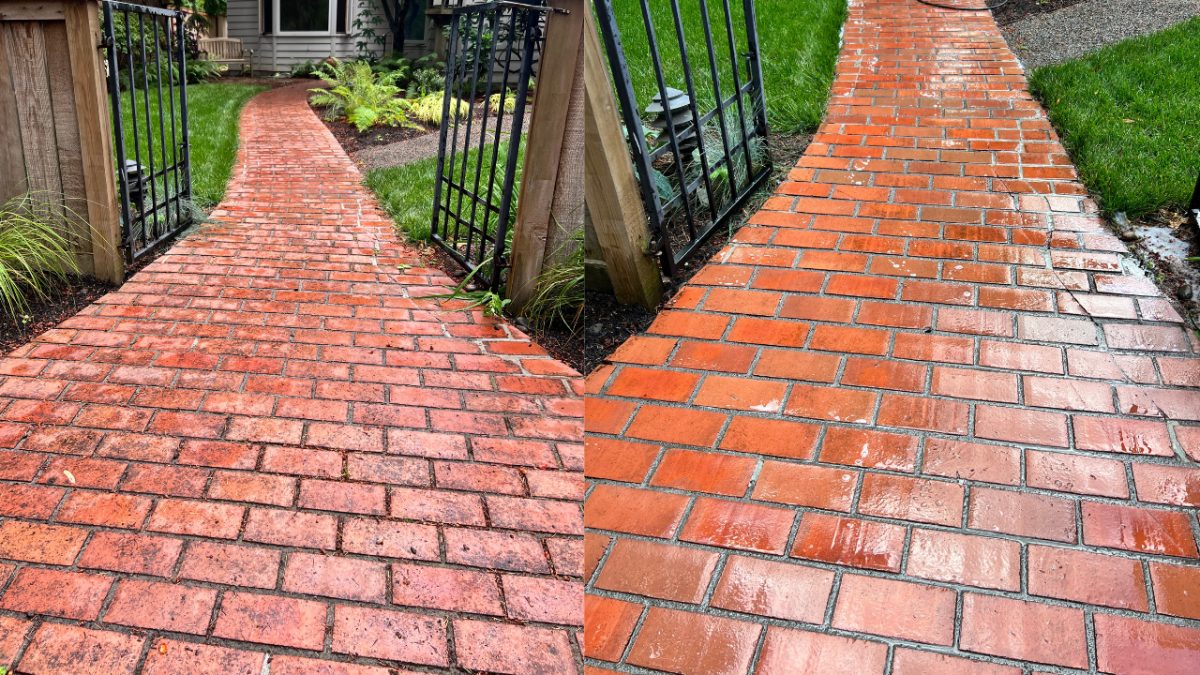
| A visible label | Unlabelled halves leave the order of events unclear | The brick path pair carries no label at all |
| Edges and joints in frame | Detail work shows at the edges before anywhere else | The patio with brick banding shows every joint line |
| A wide shot, not a tight crop | A tight crop can hide etching, splinters or missed corners | Ask for the wide shot whenever a crop feels convenient |
How should each surface look in pressure washing before and after photos?
Each surface fails in its own way, so a good photo should let you spot the failure. The notes below lean on manufacturer and government guidance wherever it exists.
Concrete and exposed aggregate
Exposed aggregate is concrete finished so the small stones show at the surface. First, look for an even tone from edge to edge, with no stripes or arcs. Stripes usually mean a hand wand worked the slab in passes. A rotating surface cleaner leaves a flatter, more uniform finish instead. Then check the aggregate itself. The stones should look clean, not loosened or freshly exposed.
Stone, pavers and brick
Brick and natural stone show harm sooner than plain concrete does. The National Park Service guide to cleaning historic masonry pictures one case closely. There, a high-pressure rinse after chemical cleaning left a line of abrasion across the bricks. Look along each course, therefore, for a pale stripe or a rough band. Joints matter too, because sand or mortar should still sit flush.
Wood decks and fences
Gray wood is not always dirty wood. The Forest Products Laboratory Wood Handbook explains that weathering strips colored compounds from the surface, so it turns silvery gray. It also notes that dark fungal spores often cause gray or black color. A wash lifts that mildew and the loose fibers, so brown wood shows again. Now look closer at the after side. The handbook also names a washboard surface with raised latewood as a sign of weathering or of aggressive power washing. Raised latewood means the hard summer bands of each growth ring stand above the softer wood. Smooth boards with intact grain suggest a gentler clean.
Vinyl and fiber cement siding
Siding photos hide their biggest risk behind the panel. On vinyl, the hidden risk is water pushed up behind the laps. The care guide from the siding trade association makes that point plainly. On fiber cement, look for gouged texture or bare spots in the paint. The James Hardie care advice stops at a soft brush and a garden hose, so gouges mean too much force. A siding photo with a wand pointed up at the laps is therefore a warning sign. Instead, a clean wall with no streaks under the windows is the result to look for.
Asphalt shingle roofs
Roof photos deserve the most suspicion of all. A pressure washer on asphalt shingles knocks granules loose, so the Asphalt Roofing Manufacturers Association warns against it outright. It also notes that the black streaks on many roofs are algae, not mold. A roof photo with a wand on the shingles thus records a mistake, not a result.
Gutters, fascia and soffits
The outside of a gutter tells you little about the trough behind it. Black streaks on the fascia wash off, but a blocked downspout can still sit behind a clean face. That is why GreenTree includes a downspout flow test with gutter cleaning. A photo can show the face, but the flow test shows whether water actually runs.
Which parts of a job can pressure washing before and after photos never prove?
A photo cannot show the pressure used, where the wash water went or how the surface will age. It also misses the plants and furniture around the work. Instead, those details live in the method and the written quote. So treat any photo, ours included, as one piece of evidence among several.
Wash water is the hidden part of every flatwork photo. Oregon DEQ guidance on washing activities says to dry sweep or blow loose debris away before washing. A dramatic driveway photo says nothing about whether that happened. Ask any contractor how they handle run-off before you book.
Age is the other blind spot. A fresh photo shows a surface on its best day. Moss favors shaded, damp sides, as the roofing association notes for north-facing roofs. No photo can therefore promise how long a result will last.
What does the work in these photos cost?
These ranges come from the published GreenTree price cards for the same kinds of surface. Size, condition and access set the final figure inside each range.
| Work shown in the gallery | Published range | What moves the figure |
|---|---|---|
| Two-car driveway | $299 | Oil spots, edge work and slab condition |
| Patio and hardscape, pavers or flagstone | $300 to $500 | Stone type, joint condition and furniture |
| Moss on concrete or walks | $299 to $500 | How thick and how old the moss mat is |
| Residential sidewalk frontage | $299 | Run length and growth along the edges |
| Deck up to 300 sq ft | $299 | Boards, railings and steps |
| Deck from 300 to 600 sq ft | $299 to $450 | Balusters and stair count add time |
| Fence cleaning, standard six-foot run | $299 to $400 | Length, both faces and planting along it |
| House wash, one story | $299 to $350 | Elevations, siding material and access |
| Gutters, one story | $299 | Run length, fill and downspouts |
| Gutters, two stories | $299 | Height and ladder setup |
| Pergolas, arbors and retaining walls | Quoted on site | No published range exists yet |
Book three or more services on one visit and a 10% to 25% discount comes off, growing with the list. For anything missing from this table, open the Oregon cost guide.
How do you judge pressure washing before and after photos, step by step?
Five checks take about ten minutes for a whole gallery, ours or one from any other company.
Match the angle
Find a fixed point, such as a post, a joint or a planter, in both halves. If nothing lines up, the shots may show different patches.
Check that both halves are dry
Wet surfaces read darker and richer than dry ones. Compare dry with dry, or discount the wet half.
Read the edges and joints
Edges, corners and joints reveal detail work first. A clean middle with grimy edges points to a rushed job.
Look for damage signs
Scan for stripes on concrete, pale lines on brick and ridged grain on wood. Each one can hint at too much pressure, though old wood weathers into ridges on its own.
Ask what the frame leaves out
Ask where the rinse water went and what pressure each surface got. A careful contractor answers both plainly.
Then run the same five checks on any photos a contractor sends you. They work on a phone screen too, as long as you zoom in on the joints.
Who should call someone other than GreenTree?
Anyone whose photo shows damage rather than dirt should call a repair trade first. Lifted shingles go to a licensed roofer. Soft or rotten decking is repaired by GreenTree as part of its full deck package. Gutter repairs, gutter guards and tree work also sit outside GreenTree services. Cleaning comes after the repair, not before it.
The gallery also suits owners of concrete, stone, wood, siding or gutters who want to see a similar surface. A few jobs fall outside it entirely:
- Concrete and paver sealing: GreenTree does not offer it.
- Interior cleaning: the work stops at the outside walls, apart from inside window glass when booked.
- Repairs of any kind: roofing, siding and gutter repairs belong to the trades that install them.
- Asbestos risk: the Oregon DEQ lists cement siding among materials that may hold it. Who may remove it is a question for the DEQ fact sheet, rather than a cleaner.
What does the free quote check before a price?
Here is what the free quote checks, starting with the surface and ending with the van.
The free quote looks at the surface itself before it looks at size. Material, condition and growth age decide the method. Square footage, access and what sits above the surface then set the time. The last items are the water supply, the path the run-off takes and somewhere to park. Every one of those items shapes the written figure.
- Surface type and condition: concrete, stone, wood, vinyl or fiber cement, plus any cracks or rot.
- Size: square footage for flatwork, run length for gutters and fences.
- Access: gates, steep yards, second stories and tight side passages.
- What sits above: trees, roof edges and gutters that drip onto the surface.
- Growth age: fresh algae lifts quickly, while an old moss mat takes longer.
- Water and run-off: a working outdoor tap, and where the rinse water will flow.
- Parking: a spot near the work for the van and its hoses.
Book the quote through the free quote page or call (971) 280-2861.
What do customers say about results like these?
Three quotes, copied word for word. The full set of quotes sits on the reviews page.
My driveway and back patio had not been cleaned in years. Both were so bad they looked black. By the time Green Tree was done both looked almost brand new. I would highly recommend and will use them again in the future.Diane M.
These guys are awesome, great attitude and I was completely impressed with the job they did at my new house. Will definitely be using them again and again.Jeff M.
Reasonable price. Great service experience, results, and excellent communication.Macie H.
Ten questions about these photos of our work
These are the questions a careful reader asks before trusting a gallery like this one.
Are these pressure washing before and after photos from real GreenTree jobs?
Yes. Every photo comes from the GreenTree Services media library. None is a stock image, a computer render or a competitor photo.
Why do some captions point out a wet half?
Water darkens almost every surface, and that flatters the after side. The captions flag it, so you can judge the pair fairly.
Why do the halves of some pairs face different ways?
The photographer stood in different spots for the before and after shots. Compare color and texture, therefore, not the layout of the frame.
Why is there no roof photo in the gallery?
The gallery has no roof photo yet. The roof cleaning hub explains the method instead: moss lifted by hand, then a low-pressure rinse.
Does a darker deck in an after photo mean someone stained it?
Not always. Wet wood looks darker for hours after a rinse. Staining is a separate service that waits until the boards dry.
What damage sign should I look for in a deck photo?
Look for ridged grain that resembles a washboard. Plain weathering can raise it as well as a harsh wand, per the Forest Products Laboratory. Compare it, therefore, with the before frame.
Do any of these photos show a sealer?
GreenTree does not seal concrete or pavers, so none of the concrete or stone photos show a sealer. On wood, shine on a wet half is mostly water.
How much does a driveway like the pictured one cost?
The published price card lists a two-car driveway at $299. Oil spots, edges and slab condition move the figure within that range.
Which photo comes from Corvallis?
The sidewalk pair does. It is the only photo with a confirmed town, so it is the only caption that names one.
How should I compare these pressure washing before and after photos with another company?
Run the same five checks on both sets. Match the angles, compare dry halves, read the edges and look for damage marks.
Want a result like these on your own surface?
Tell us the surface, its size and what grows on it. You get the price in writing first, and only then does any water run.
GreenTree Services, 1460 NW Van Buren Ave, Corvallis, OR 97330 · (971) 280-2861 · Oregon Registry #2424331-91
Sources: Verify Registry #2424331-91. Roof algae guide at asphaltroofing.org. James Hardie siding care. US Forest Service handbook chapter on wood finishes. NPS Preservation Brief 1. Oregon DEQ washing activities. Oregon DEQ residential asbestos.