
Moss Removal in Eugene, Oregon: What Hands Lift, a Gentle Rinse Finishes
GreenTree’s moss removal in Eugene, Oregon is the hand-lifting and low-pressure rinsing of moss from roofs, walks and patios. The crew lifts it by hand first, then rinses under 500 PSI, never putting a machine on shingles. Roof moss work runs $300 to $900, with a written price per surface first. Readers who want the wider picture can start with the Oregon moss removal guide.
Sources: the City of Eugene, OSU Extension, ARMA, NOAA and the National Weather Service.
On this page
- Cost, copper strips and soft washing
- Why moss grows here
- Surfaces and prices
- Soft wash vs pressure
- Products and runoff
- Roofs
- Walks and patios
- Roof damage and the cost of waiting
- Lawn moss
- Regrowth
- DIY or a hired crew
- Fit and limits
- What the free quote checks
- How a visit runs
- Timing and rinse water
- Why GreenTree
- Nearby service area
- Questions answered
Cost, copper strips and soft washing: moss removal in Eugene, answered before you call
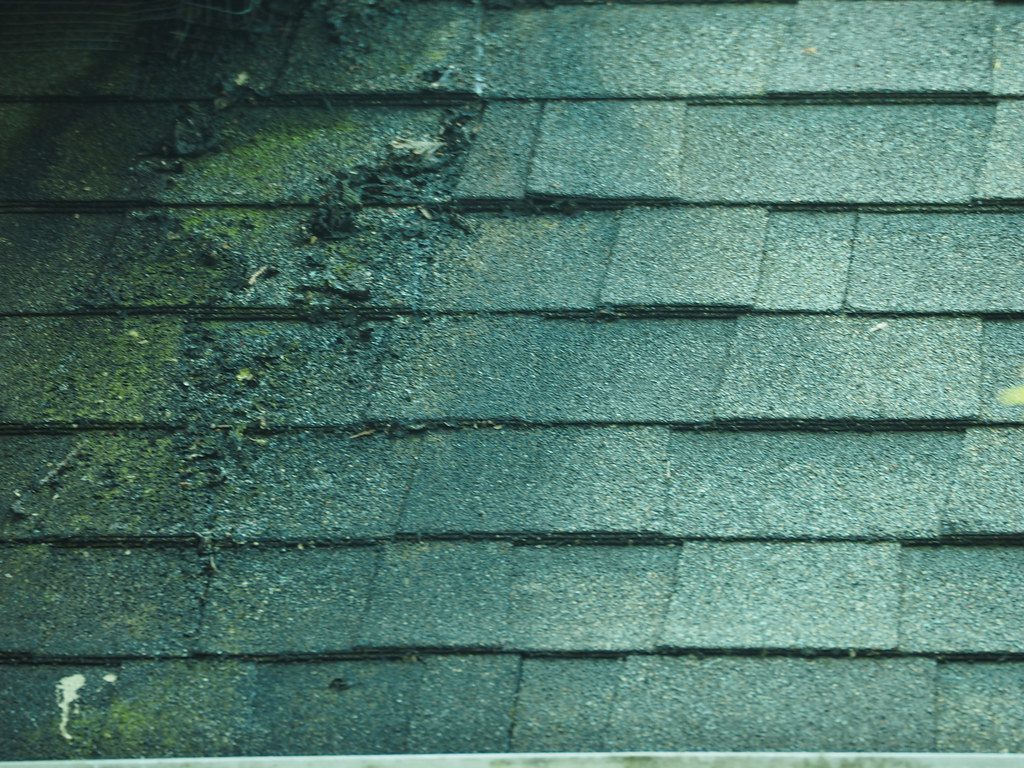
Each reply rests on a posted range or a public source, so you can check it yourself.
How much does moss removal in Eugene, Oregon cost?
Roof moss work runs $300 to $900 by roof type, concrete walks and driveways run $299 to $500, and the job comes as one free written quote. A moss-out treatment (Moss Out, sold at The Home Depot) is $299. General add-ons run $299 to $500+. Bundling three or more services saves 10% to 25%, and there is no trip fee on the Willamette Valley route.
What should Eugene homeowners know about copper moss strips?
Public sources describe copper and zinc strips differently, and GreenTree does not install them. OSU Extension calls metal strips not effective to eliminate moss, while the City of Eugene lists them with a limited reach below the strip. It also warns about zinc runoff. Ask a roofer before anyone nails metal to shingles.
What should Eugene homeowners know about moss removal soft washing?
On a Eugene shingle roof, hands do the lifting and a rinse under 500 PSI clears the debris. That rinse is the gentle part. So the plain label soft washing does not quite fit this work. The ARMA guidance for asphalt shingles points the same way.
Why does moss thrive in Eugene, Oregon?
Moss removal in Eugene, Oregon starts with one fact: from autumn into spring, the city hands moss the moisture and shade it needs. The City of Eugene handout says moss thrives in winter. It then goes dormant once summer dries it out. Rain falls far more heavily in the cold months than in the warm ones.
The seasons set the pace. Winter brings the heaviest, most frequent rain, so moss grows fastest and greenest then. Then spring stays wet enough on shaded roofs to keep that growth going. Summer finally dries the surface, so the moss goes dormant and loose. Autumn returns the rain, so the cycle starts again with the next wet spell.
What each season does to moss
| Season | Rain in Eugene | What moss does |
|---|---|---|
| Winter, December to February | Heaviest and most frequent | Moss peaks, because water is plentiful and light is low |
| Spring, March to May | Still frequent | Shaded roofs stay damp, so growth continues |
| Summer, June to August | The driest stretch | Moss dries out and goes dormant, so the mat shrinks |
| Autumn, September to November | Rain returns | Moss wakes with the next moisture cycle |
Shade does the rest
The city handout calls a rooftop shaded by trees a very desirable place for moss. A shaded roof often stays moist, it adds. Ash from a fireplace chimney can even feed the growth. OSU Extension likewise says moss settles on shaded surfaces first.
Part of that shade is man-made. The Oregon Encyclopedia notes that early residents planted and tended street trees across the city’s residential blocks. A mature canopy now hangs over many roofs, and moss moves in there before anywhere else. Higher ground around Eugene and Springfield also collects more rain each year, according to the National Weather Service climate summary. Hillside roofs tend to stay wetter still.
What does moss removal in Eugene include, surface by surface?
Moss removal in Eugene, Oregon covers any damp, shaded surface: roofs, walks, patios, steps and block walls. Hands lift thick moss first on every one, before any rinse. After that, shingles get a low rinse while bare concrete gets the rotating surface cleaner. Stone and timber get lighter settings. Each surface carries its own figure.
| Eugene surface | Method after hand lifting | Price | Read more |
|---|---|---|---|
| Composition shingle roof | A low rinse, with the machine kept off the shingles | $300 to $600 | Roof cleaning in Eugene |
| Steep or two-story roof | A low rinse, with extra ladder time | $400 to $700 | Roof cleaning in Eugene |
| Cedar shake roof | The mildest setting on the truck | $500 to $900 | Roof cleaning in Eugene |
| Concrete walks and driveways | Surface cleaner passes on bare slab only | $299 to $500 | Driveway cleaning in Eugene |
| Pavers, flagstone and block walls | Lower pressure, since joints and soft stone erode | Quoted on site | Patio cleaning in Eugene |
| Steps, decks and fences | Timber-safe pressure only | Quoted on site | Deck restoration in Eugene |
| Gutters below a mossy roof | Debris out, then a flow test on every downspout | Add-on, $299 to $500+ | Gutter cleaning in Eugene |
| Moss-out treatment | Added after the surface is clear | $299 | Roof cleaning in Oregon |
Each surface gets its own line on the quote, because one line never covers another. The exact figure inside each band tracks square footage, moss depth, and how easily the crew can reach the work.
Can moss removal and gutter cleaning happen in one Eugene visit?
Yes: gutters below a mossy roof go on the same visit, and bundling three or more services saves 10% to 25%. Moss lifted off a roof drifts toward the gutters anyway, so the crew takes the debris out and then flow-tests every downspout, watching for a steady stream within a few seconds. The gutter work shows as its own line on the written quote.
Soft wash or pressure: which method clears Eugene moss safely?
Soft washing runs under 500 PSI, while pressure washing reaches up to 4400 PSI. The surface decides which one the crew uses. Shingles and timber never meet the strong setting. Bare concrete can take it. Either way, the written figure holds inside its band. The technique never changes the price.
Pressure and surface have to match, or the cleaning does more harm than the moss. A shingle sheds its protective granules under high pressure, so GreenTree keeps the machine off every roof. Instead, the crew relies on hand lifting plus a gentle rinse. Wood siding, decks and fences also stay on the soft setting, where the water loosens growth without tearing the grain.
| Method | Pressure | Where it belongs |
|---|---|---|
| Soft wash and low rinse | Under 500 PSI | Shingle and shake roofs, siding, decks, fences and painted trim |
| Pressure washing | Up to 4400 PSI | Bare concrete walks, driveways and sturdy masonry |
Concrete is the one place where a surface cleaner earns its keep. The flat head dries the slab evenly, and it lifts the ground-in grime a hand brush would miss.
What do the City of Eugene and OSU Extension say about moss products and runoff?
The City of Eugene says to start with physical removal, and it ties zinc and copper products to river pollution. Its wastewater lab found unusually high zinc in one residential area after winter storms. The city named zinc moss products applied before rain as the most likely source. Moss removal in Eugene works better when it starts with hands, not chemistry.
That finding comes from the city stormwater news item. It also lists other possible zinc sources, such as galvanized roofing and fencing. The city handout adds that most moss products can harm fish and aquatic invertebrates.
Copper and zinc strips, source by source
Two public sources describe strips in different ways. OSU Extension says metal strips are not effective to eliminate moss. It notes that installers usually nail strips to the roof, so leaks can follow poor work. Zinc and copper, it adds, harm fish and other aquatic life.
The city handout lists strips beside soap and acid products. It says a strip works a limited distance below itself and can last up to a year. Its side-effect column warns that runoff from zinc flashing may contaminate vegetation and water supplies. ARMA mentions zinc or copper strips only as an option when it is time to replace a roof.
What GreenTree does instead
GreenTree installs no strips. Hands lift the moss, and then a rinse clears the debris. OSU Extension and the city both name physical removal as the first step. The method matches their advice, and the crew steers rinse water onto lawn or beds, away from the storm drain.
How does the crew lift moss from a Eugene roof?
Moss removal in Eugene, Oregon on a roof means hands first, then a rinse under 500 PSI. The crew frees thick moss from the shingles by hand. No pressure washer touches the roof. Debris that drifts to the gutters then becomes a priced line. If a shingle is damaged, it gets recorded for your roofer.
A city handout suggests a stiff push broom or a tool with a flat edge. Too much force can damage shingles, it warns. OSU Extension recommends scraping and scrubbing, and it says pressure washing is not advised for roofs. ARMA goes further for asphalt shingles, naming the cost as granule loss and very likely early failure. That is why GreenTree keeps the machine off every shingle.
Why a mossy roof is worth clearing
The city handout says thickening moss works under the shingles and lifts them, which opens the roof to leaks. The OSU Extension Solve Pest Problems guide adds that dried moss and debris on a roof is flammable, so embers or sparks could ignite it. Clearing the mat protects both the shingles underneath and the house below.
Shingle repair and tree trimming fall outside this work. Nobody can say how long a clean roof stays clean, because shade and damp decide the pace. GreenTree names no interval it cannot defend.
Can GreenTree clear moss from Eugene walks, steps and patios?
Moss removal in Eugene, Oregon also covers concrete walks, steps and patios, and it starts with hand lifting. Bare concrete then gets the rotating surface cleaner, so the slab dries evenly. Pavers and flagstone get gentler pressure than plain concrete. Concrete walks and driveways run $299 to $500, priced in writing first.
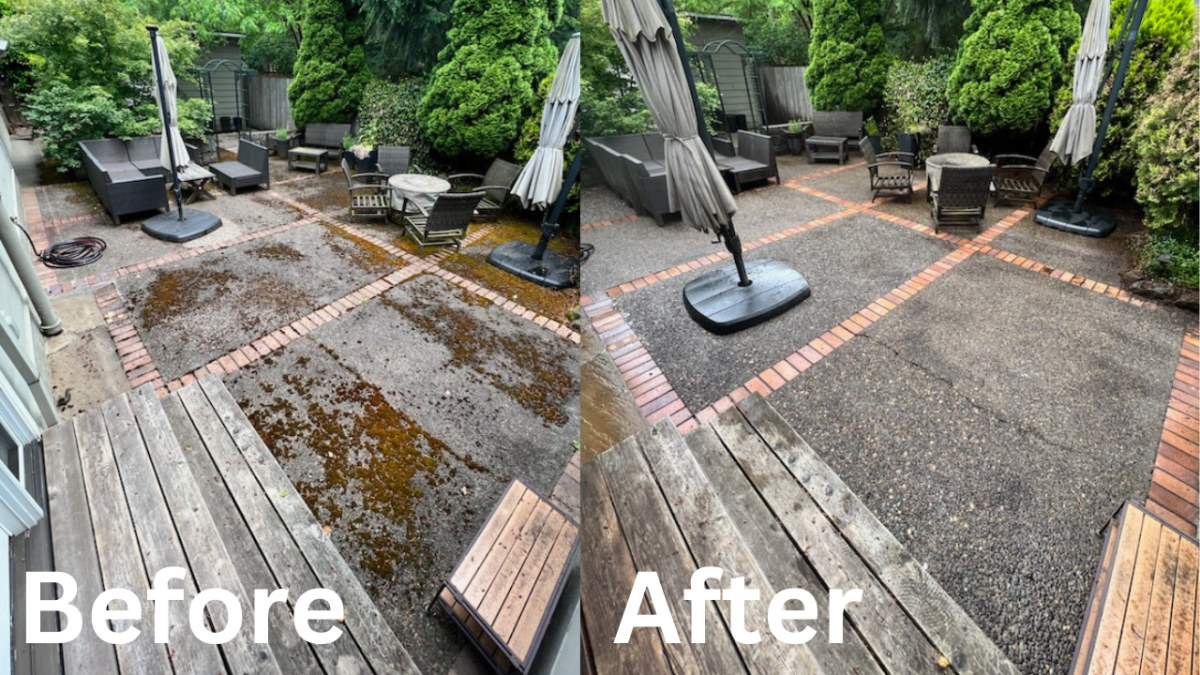
OSU Extension says moss on patios, decks and walkways can turn slippery, and it advises removing it from high-traffic areas. For a small patch, it names a putty knife, a stiff brush or a stiff broom as the right tools.
Steps deserve attention first. A slick step by the back door matters more than a patch near the fence. Block walls and garden edges hold moss too, because their caps and joints stay damp. The crew works those with light pressure only, never the strong setting that suits an open slab.

How does moss damage a Eugene roof, and what does waiting cost?
Moss lifts shingles, holds water against the deck, and opens a roof to leaks, which is why clearing it early protects the house. The City of Eugene handout warns that thickening moss works under the shingles and raises them. Rain gets in through a raised shingle. Replacing a roof is one of the largest single maintenance bills a homeowner faces.
Moisture clings to a mossy roof long after the rain stops. That damp works into the seams and under the edges, where the city handout says the mat lifts shingles from below. Each lifted edge is a path for water. Once water reaches the deck, the repair bill climbs well past the cost of a wash.
There is a fire angle too. The OSU Extension Solve Pest Problems guide notes that dried moss and roof debris are flammable, so a stray ember can take hold in a dry summer. Clearing the mat each year removes that fuel. A clean roof sheds water and dries faster after every storm, and the shingles underneath keep the granules that an aggressive machine would strip. GreenTree logs any shingle fault it finds so your roofer can act before a small lift turns into a leak.
Does moss removal in Eugene cover lawn moss?
Ask us first, because lawn moss is a turf and soil problem, so the OSU Extension lawn guide is the better source. GreenTree clears moss from roofs, walks, patios and steps. Lawn moss follows different rules. Grass needs sun and drainage to crowd it out. Check with us if your moss sits at the edge of a hard surface.
The Extension guide Managing moss in lawns in Western Oregon names the usual causes. Moss thrives in lawns that stay wet, shady or infertile, or that homeowners mow too short. It also warns that roof and walkway products contain copper and zinc, which injure desirable grasses when the runoff reaches them.
A lawn plan starts with sun, drainage and healthy turf, not with a roof method. Instead, a lawn-care professional can build that plan. The right fix often has nothing to do with a pressure washer at all.
Will moss come back after removal in Eugene?
It can. Removal clears the moss there now but leaves the shade and damp behind. The city handout says the way to keep moss away is to change the conditions it favors. GreenTree names no regrowth interval and makes no promise about how long a surface stays clean. The site decides that.
Four site changes slow the return. Each one comes from public advice rather than a cleaning crew.
- Open the canopy: prune overhanging trees so more light and air reach the roof, as the city handout advises. An arborist handles the bigger limbs.
- Clear debris: remove leaves and branches often, since debris traps moisture on a roof, deck or walk.
- Move water away: point downspouts at a vegetated area, which the city prefers to the storm system.
- Plan the next roof: the city and OSU Extension both mention metal roofing, where moss struggles to hold on.
A north-facing roof under trees tends to green up sooner than a sunny one. Let returning green set the next date, not the calendar, and book again when the new growth shows.
DIY moss removal or a hired crew in Eugene: which fits your roof?
A low patio or a short fence can suit careful DIY, while a roof usually calls for an insured crew on a ladder. OSU Extension names a putty knife, a stiff brush or a stiff broom for small patches. But a steep or two-story roof adds height, footing and shingle risk that a weekend tool does not cover. The table below sets the two side by side.
| What the job needs | Doing it yourself | A GreenTree crew |
|---|---|---|
| Reaching a steep or two-story roof | Your own ladder and footing | Trained crew working behind $2M liability cover |
| Protecting the shingles | Easy to scrub too hard and strip granules | Hand lifting, then a rinse under 500 PSI only |
| Keeping zinc out of the drain | Products often rinse toward the storm system | Rinse water steered onto lawn or beds |
| A clear price before you start | Hard to judge the full job | Written quote per surface, fixed before work |
| Spotting a roof fault | Easy to miss from the ground | Any lifted shingle logged for your roofer |
The honest line is simple. Take the putty knife to the back step if you like. Leave the roof, the ladder and the shingles to a crew that carries insurance and hands you a price in writing. That choice keeps the small jobs cheap and the risky ones safe.
Who should book moss removal in Eugene, Oregon, and who should call another trade first?
Choose moss removal in Eugene, Oregon once moss is the only fault on a sound surface. A lifted shingle, a rotten board or a sagging gutter needs repair before the moss work. Cleaning cannot fix any of them. The crew says so at the quote. The table below names the trade for each case.
| What you see | Who to call first | Why |
|---|---|---|
| Curled, cracked or missing shingles | A roofer | A wash cannot mend a shingle, so the roof needs a fix first |
| Branches shading the roof or walk | An arborist | Tree work sits outside GreenTree, yet shade feeds the moss |
| Sagging or leaking gutters | A gutter contractor | Gutter repair belongs to another trade |
| Spongy boards or crumbling railings | GreenTree repairs decks itself | Rot calls for repair before any wash |
| Moss in the lawn | Ask us first; a lawn-care professional for turf | It is a turf problem, so the lawn guide applies |
If a job fits no row, ask us first. The honest answer sometimes sends you to a roofer before it sends you to us, and that order saves you money.
Surface, depth, shade, water: what the free quote checks for Eugene moss
Every item below shifts the hours, so every item shifts where the figure lands inside its band.
- Material: shingle, shake, slab, stone or boards, since each one limits the pressure.
- Depth: thin growth rinses away, whereas thick cushions need hands.
- Condition: weak shingles, soft boards or cracked slabs may change the plan.
- Pitch and height: a steeper roof means more ladder time.
- Shade source: nearby firs, maples and north walls hint at where moss will return.
- Shrubs below: the crew soaks and covers them before the rinse.
- Drainage: water goes to soil, away from any storm drain the crew finds.
- Gutters: how full they run hints at what the roof sheds.
- Tap and truck: an outdoor tap near the work, plus parking close by.
Photos alone price many simple jobs. Big or steep roofs need a short visit first. Accepting the figure locks it in, and no surprise line appears on the invoice later.
How does moss removal in Eugene, Oregon run, step by step?
A Eugene moss visit runs in five parts, and hand lifting always comes before any water flows. Photos come first, by phone or through the quote form, since pictures price the simple jobs. Beds get soaked and covered before the rinse, and you inspect every surface before the invoice arrives.
Send roof and walk photos
Phone (971) 280-2861 or use the form, since pictures price the simple jobs.
Protect beds, plan the rinse
The crew soaks and covers the shrubs below, then plans where the water goes.
Lift by hand
Water waits while thick moss comes off roofs, steps and slabs.
Rinse low
A low rinse follows on roofs and timber, while bare concrete gets the surface cleaner.
Inspect the result
You check every surface, then the invoice arrives.
Visit length tracks the surface list on your quote. Cash, check or card all work at the end. Nothing extra appears on the bill, because the written figure was fixed before the crew arrived.
When should you book moss removal in Eugene, and where does the rinse water go?
Book in a dry spell. Wet moss makes steps slippery, and the crew needs firm footing. Summer is the driest season, and moss goes dormant then, the city says. Rinse water lands on soil rather than a drain. Crews sweep loose moss up before any water flows.
The city handout suggests redirecting downspouts to a vegetated area rather than the storm system, and GreenTree follows the same logic on the ground. The crew plans the rinse route when it writes the quote. If a stain or an oily patch needs a degreaser, the crew keeps that rinse away from the drain as well. Oregon DEQ’s guidance on washing activities sets out the same idea.
You do not have to wait for summer to book, because any dry week gives the crew safe footing. A damp roof in April clears as cleanly as one in July, once the surface dries enough to stand on.
Why hire GreenTree for moss removal in Eugene, Oregon?
How is GreenTree’s insurance verified for a Eugene moss job?
GreenTree carries $2 million in general liability insurance plus workers compensation on every Eugene moss job, verifiable on the GreenTree insurance certificate and available on request. The certificate names the cover, and the crew works at height behind it. A written price lands before the ladder, and nothing shifts once the job starts.
What registration backs GreenTree in Eugene?
GreenTree registered with the Oregon Secretary of State under number 2424331-91, a business registration recorded on the state’s public record and open for anyone to look up. The company was founded in Corvallis in 2022. That registry is a business registration only.
How many Oregon properties has GreenTree cleaned?
GreenTree has cleaned more than 500 properties across the Willamette Valley, work the crew has logged since the company was founded in 2022. Each one carried a written price set before the crew arrived. The result sits behind a 5.0 rating on Google.
The promise is plain: insured crews, a written quote, and careful work on every job. GreenTree sets the pressure and the method to the surface. The crew lifts moss by hand before any rinse, and it refuses to put a pressure washer on your shingles. Bundling three or more services, such as a roof wash with gutter clearing and a driveway, saves 10% to 25%, because the crew is already on site with both systems. There is no trip fee anywhere on the Willamette Valley route.
Where else does GreenTree handle moss and roof work near Eugene?
GreenTree serves Eugene and the wider Willamette Valley, and the same hand-lift method and written quote apply. Neighboring towns get the identical approach, matched to each surface. The crew works north through the valley to Corvallis and Albany, and it reaches the Portland metro on set route days.
If your home sits outside the city line, the work does not change. For a wider look at the method and the local conditions, start with the Oregon moss removal guide. Homeowners nearby can read about moss removal in Albany or roof cleaning in Portland. In Eugene itself, the related pages cover roof cleaning and exterior cleaning, each with the same written-quote promise and the same insured crew. There is no trip fee for a Eugene address on the Valley route.
What customers say
Both quotes are word for word, and the reviews page holds more.
My driveway and back patio had not been cleaned in years. Both were so bad they looked black. By the time Green Tree was done both looked almost brand new. I would highly recommend and will use them again in the future.Diane M.
Great service. Very efficient and polite.Barbara R.
Those results sit behind a 5.0 rating on Google.
Ten answers on moss removal in Eugene
Short replies about method, plants, strips, cost, timing and trades.
Does moss removal in Eugene use a pressure washer on shingles?
No, the shingles only ever see a rinse under 500 PSI, after hands lift the moss away. ARMA ties pressure washing on asphalt shingles to granule loss, so the machine stays off every shingle. Bare concrete is the one surface where stronger pressure belongs.
Will moss removal in Eugene harm the plants beside my house?
No: the crew soaks and covers shrubs below the work before any rinse. The crew sweeps loose moss up first, so nothing washes toward the street or the beds. Rinse water then lands on soil, not on a drain.
Does GreenTree install zinc or copper strips on Eugene roofs?
No, a roofer fits strips, and GreenTree does not sell or install them. OSU Extension says metal strips are not effective to eliminate moss, so the crew sticks to physical work. The crew lifts the moss by hand, rinses, and notes any roof fault for you.
When should I book moss removal in Eugene?
Book when green shows, and pick a dry spell for firm footing. The city says moss dries out in summer, so any dry week suits ladder work. June to August is the driest stretch in the season table above.
How much does moss removal in Eugene cost?
Roof moss work runs $300 to $900 by roof type, concrete walks and driveways run $299 to $500, and the job is set as one free written quote. A moss-out treatment is $299, add-ons run $299 to $500+, and bundling three or more services saves 10% to 25%.
Can you remove moss from a Eugene deck or fence?
Yes, timber gets the soft wash setting under 500 PSI, never the strong setting that suits bare concrete. Hands lift thick moss off boards and rails first. The price comes on site, since boards and fence length vary. A spongy board or crumbling railing is handled by GreenTree as part of its full deck package before any wash.
Do you trim the trees that shade my Eugene roof?
No. An arborist handles branches, so GreenTree leaves tree work alone. Trimming still helps, because both the city and OSU Extension name sunlight as the long-term fix. Shade keeps a roof damp long after rain, and damp shingles are where Eugene moss settles first.
What does a Eugene moss quote need from me?
Send photos of the roof and the walks, then say which surfaces you want. A short visit follows for steep or tall roofs, and the written figure then stands.
Should I call a roofer before moss removal in Eugene?
Call a roofer first if shingles curl, crack or go missing. A wash cannot repair them. A sagging gutter goes to a gutter contractor, while GreenTree repairs spongy deck boards itself, as the trade table above shows. A sound roof with moss is otherwise ready for removal.
Does the moss crew carry insurance in Eugene?
Yes. GreenTree carries $2 million in general liability insurance plus workers compensation, and paperwork is available on request. Registry number 2424331-91 sits on the Oregon Secretary of State record.
Start your moss removal in Eugene with a written price
Phone or use the form. A separate written figure covers each surface.
GreenTree Services · (971) 280-2861 · Oregon Registry #2424331-91
Roof sources: ARMA and OSU Extension. Also cited: City of Eugene, NOAA, NWS, Oregon Encyclopedia.