
Fence Cleaning Corvallis Oregon: Cedar, Painted and Composite Fences
A gray, dark or green film on the boards is the one common problem that fence cleaning in Corvallis, Oregon fixes. GreenTree Services lifts that film at low pressure along the grain, so the wood keeps its surface. A cedar or composite fence runs $299 to $400, and the written price comes first. The crew cleans both faces, the posts and the rails.
On this page
- Grain, shade and stain
- Cost, pressure and timing
- What greys a Corvallis fence
- What a fence clean includes
- The method for each fence type
- Why low pressure protects wood
- How a fence clean runs
- Published prices
- Clean, stain or replace
- Who the work suits
- What the free quote checks
- Rinse water and plants
- Corvallis streets and fences
- Fence cleaning outside Corvallis
- Questions about fence cleaning
Fence cleaning in Corvallis: shaded faces, cedar grain and when to stain
Why does the shaded face take longest during fence cleaning in Corvallis?
On a $299 to $400 job, the shaded face takes most of the time. Shade keeps boards damp, so moss and algae settle in. Timberhill fir drops needles along fence lines, which hold that damp. The sunny side often lifts in a single pass. Fence cleaning in Corvallis still covers both faces, plus the posts and rails.
Can I stain right after fence cleaning in Corvallis?
Once the boards dry right through, yes. Staining is a separate add-on at $299 to $500+, set by size and product. Stain only grips clean, dry, sound wood, so the June to August dry spell suits it. Book fence cleaning in Corvallis first, because a clean fence also shows what’s worth keeping.
Does fence cleaning in Corvallis use a pressure washer on cedar?
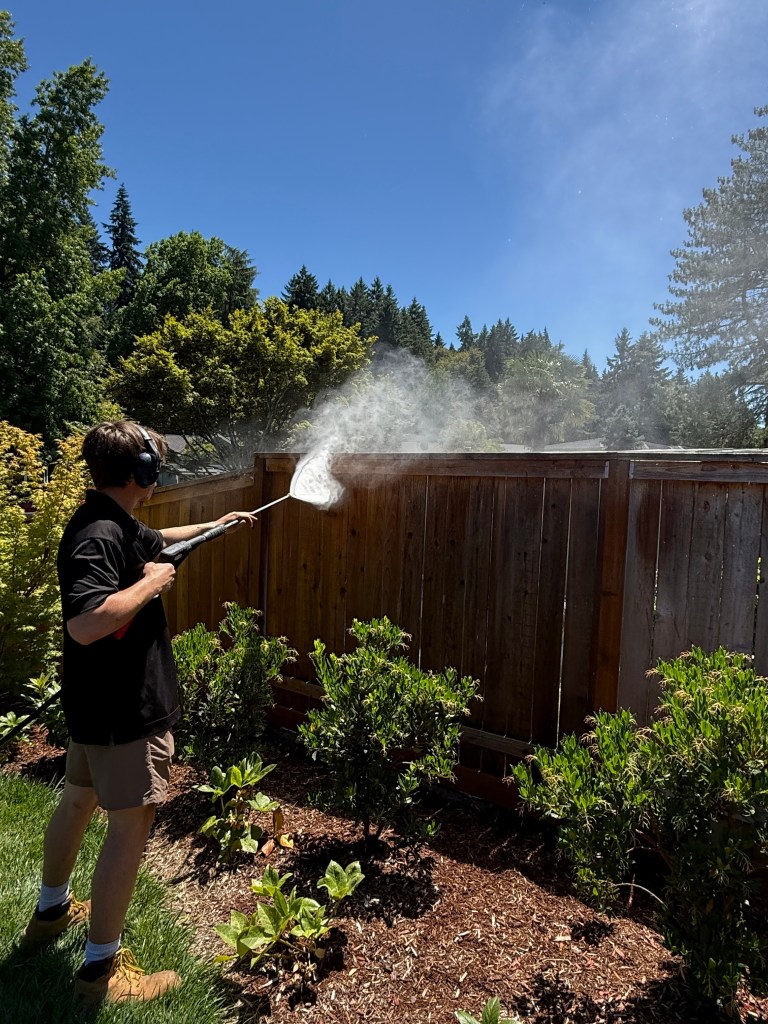
Not at full force. GreenTree keeps a wood fence under 500 PSI, while concrete can take up to 4400. Cedar’s soft earlywood wears faster than the harder latewood, so high pressure leaves a washboard surface. A wood cleaner lifts the film, and a gentle rinse follows the grain. So fence cleaning in Corvallis leaves the boards level.
Fence cleaning in Corvallis, Oregon: three quick answers
This section starts with price, pressure and timing. Each answer rests on a source or a published figure. You can check every one before you call.
What does fence cleaning in Corvallis cost?
A standard six-foot residential fence runs $299 to $400 to clean, the figure GreenTree fixes in a written quote before work starts. Length, height and the age of the growth set where you land inside that band. The number goes on paper, and it stays put on the day. A deck or patio can share the visit, and three or more services booked together earn the 10% to 25% bundle discount.
Can a pressure washer damage a Corvallis cedar fence?
Yes, high pressure can damage cedar, because the soft wood between the growth rings wears away first. The Forest Products Laboratory links aggressive power washing to a rough washboard surface, since earlywood erodes faster than the harder latewood beside it. Pressure that strips paint easily cuts deep ridges into soft boards. The crew keeps pressure low and works along the grain to leave the surface level.
When is the best time for fence cleaning in Corvallis?
Summer suits a Corvallis fence best, because the dry stretch from June to August lets boards dry right through. That matters most if you plan to stain afterwards, since stain only grips dry, sound wood. Autumn works too, though a fall fence takes longer to dry between showers. A sunny window lets the crew clean and leave the boards ready.
Why do Corvallis fences go gray, dark and green?
Three forces work on a Corvallis fence together: sunlight, mildew and shade. Sunlight breaks down the surface fiber. Mildew lays down a gray or blotchy dark film. Shade keeps boards damp, so moss and algae settle in. The Willamette Valley stays wet for much of the year, and a shaded face seldom dries fully between showers.
Mildew greys a board without eating it
The Forest Products Laboratory Wood Handbook explains that mildew is not a direct cause of decay. Mildew grows on the wood surface as a fungus, and the gray or black color comes from its spores and threads. Weathering itself removes only a thin skin of wood over a whole century. A gray fence is usually sound wood under a film. Cleaning lifts that film, yet it cannot rebuild fiber that has already worn away. That difference drives the whole method the crew uses, because a gentle wash restores color while a hard blast strips it.
Shade decides which face goes green first
Shade matters most of all. OSU Extension notes that moss depends on shade to thrive, and fences show this plainly. The sunny side of a cedar fence can look fine while the north face turns green. Fir and bigleaf maple line many fence runs here, and they drop needles and leaves that trap damp against the boards. The shaded face needs slower hand work, and the sunny face often lifts in a single pass. Crews plan each run around where the film actually sits.
Cedar bleeds color onto what sits beside it
Western redcedar carries water-soluble color in its heartwood. The Forest Products Laboratory reports that rain can leach those extractives out and leave a yellow to reddish-brown stain on nearby surfaces. A cedar fence beside a painted wall or gate can mark it that way. A wash lifts the surface film, though the wood keeps making color as long as it weathers. Knowing that saves a wasted hard scrub on a stain that comes from the wood itself.
Rain by the season in Corvallis
Rain here follows a clear pattern, and it shapes when a fence is worth cleaning. Winter runs wettest, spring and autumn each stay damp, and summer is the dry gap. The table below turns that pattern into plain advice for a fence line.
| Season | Rain level | What it means for a fence |
|---|---|---|
| Winter, December to February | Wettest stretch | Boards stay damp and film builds |
| Spring, March to May | Still wet | Damp boards begin to dry out |
| Summer, June to August | Driest stretch | Boards dry through, the best cleaning window |
| Autumn, September to November | Wet again | Needles and leaves settle on the line |
Oregon State University sits inside the city, so the pattern above describes Corvallis itself rather than a distant airport station.
What does a fence clean include?
A fence clean covers every board face, the posts and rails, and the ground and plants along the fence line. The crew checks the wood first, cleans at low pressure along the grain, then rinses from the top down. Photos of each run, before and after, reach you at the end.
On the fence
- Wood check first. Before any water flows, the crew inspects the structure for soft boards, loose rails and leaning posts.
- Cleaner on the gray boards. A wood cleaner goes on, and a low-pressure rinse then follows the grain.
- Both faces. The street side and the shaded north face both get cleaned, along with the posts and rails.
- Top-down rinse. Loosened film runs off each panel rather than streaking the boards below it.
- Rot flagged. A soft post base or board gets noted in writing so you can plan a repair.
Around the fence
- Plants protected. Shrubs and beds along the fence get a clean-water soak and a cover before the cleaner goes on.
- Run-off steered. The rinse flows to soil, away from the curb inlet.
- Photos before and after. You see each run of fence side by side, including the shaded face.
Nothing in this list is a hidden add-on, because the written quote already covers all of it. The one price you accept is the price you pay when the crew packs up.
Which cleaning method suits each type of Corvallis fence?
Cedar and redwood get the lowest pressure, while painted wood, treated pine and composite get low pressure matched to the material. No fence needs the full force that bare concrete takes. Vinyl panels follow the same soft-wash limit as vinyl siding, under 500 PSI. For metal fences such as chain link or wrought iron, ask us before booking.
| Fence type | Method | What to watch |
|---|---|---|
| Cedar or redwood boards | Lowest pressure, along the grain | Soft wood furrows if pressure runs high |
| Painted or stained wood | Low pressure, loose finish rinsed off | Paint chips must stay out of drains |
| Pressure-treated pine | Low pressure, standard wood cleaner | Newer boards have a smooth planed face |
| Composite panels | Gentle setting within maker guidance | Check the maker guidance first |
| Vinyl panels | Soft wash under 500 PSI | Same low limit as vinyl siding |
| Metal fences | Ask us first | Not covered on this page |
Cedar and redwood
Cedar and redwood forgive very little. Earlywood is the soft inner band of each growth ring, and latewood is the harder outer band. A fast pass leaves ridges, because the soft bands wear first. Slow passes along the grain keep the surface level and even. The Wood Handbook adds that badly weathered wood with loose surface fibers cannot hold paint or stain. That fact matters if you plan to finish the fence later, so a careful clean protects the next coat as much as the look today.
Painted and stained fences
Loose paint comes off under water, and that debris needs somewhere safe to land. The Oregon DEQ washing guidance asks that cleaning minimize the detachment of paint residues. Lower water pressure or a different cleaning agent can do that, and the guidance also calls for detergents without abrasive properties on painted surfaces. A painted fence therefore gets a gentler pass and tighter control of where the chips go. The crew bags any flakes rather than letting them reach a storm drain.
Pressure-treated pine and composite
Treated pine shrugs off the rinse better than cedar does, and composite panels follow whatever limit the maker sets. Neither material rots the way cedar can, yet both grow green film in shade. The crew picks a cleaner that suits each board rather than one product for every fence. A planed pine face cleans quickly, while a textured composite grain holds film a little longer and takes a second pass.
Why does low pressure matter so much on a fence?
Low pressure cleans a fence without carving it, which is why GreenTree works a wood fence under 500 PSI rather than the up-to-4400 PSI a hard concrete job can take. Soft wood erodes under force, and a scarred board cannot hold the next coat of stain.
Pressure is a tool, not a setting to crank. Concrete and brick accept real force, and a driveway can take a tight, high-pressure fan. A cedar or redwood board is the opposite surface, since the force that lifts oil off concrete will cut ridges into soft growth rings. The crew reads the material first, then dials the machine to match. A fence rarely needs more than a gentle rinse behind the cleaner.
Chemistry does the lifting on wood, and water does the rinsing. A wood cleaner loosens the gray film and the green growth, and a soft, wide stream carries it away. That sequence keeps the surface flat so the grain stays crisp. A homeowner with a rented machine often skips the cleaner and leans on pressure instead, which is exactly how a fence ends up furrowed. The method protects the board for the years after the wash, not only the afternoon of it.
The same thinking reaches the posts and rails. A soft, aged post base takes a lighter touch than a sound mid-rail, and the crew backs off where the wood has started to give. Every pass serves the wood rather than the clock.
How does a Corvallis fence clean run, step by step?
A fence clean always follows these six stages, in this order, from the first call to the photos.
First, call or send photos
Call (971) 280-2861 or fill in the form. Photos of the fence help us plan.
Next, walk the fence line
The crew measures each run and checks both faces for soft boards.
Then cover the plants
Beds beside the boards get wet down, then covered with cloth.
Clean at low pressure
Wood cleaner goes on, and the rinse follows the grain, top down.
Rinse and check
A last rinse clears film onto lawn or beds, and the crew checks for missed boards.
Finally, walk-through and photos
You inspect the result. A photo pair per run follows, and any rot goes in writing.
Fence length and height set the time on site, so the walkthrough fixes the day. A fence can share one visit with a deck, patio, driveway or house wash, which keeps the crew’s setup working harder for you. Once you approve the result, the invoice takes cash, check or credit card. The written figure never changes after you sign it, so there is no surprise at the end of the job.
How much does fence cleaning cost in Corvallis, and what pairs with it?
Compare these bands with the Corvallis pressure washing page before you call. Your own price comes after the walkthrough, fixed in writing.
| Job | Price band | What moves the figure |
|---|---|---|
| Fence, cedar or composite | $299 to $400 | Length, height and growth age |
| Fence staining, add-on | $299 to $500+ | Size and the product chosen |
| Two-car driveway | $299 | Slab size and oil staining |
| Driveway, walkways and patio | $299 to $350 | Walks and patio added to the drive |
| Patio or hardscape | $300 to $500 | Total flatwork on the lot |
| House washing, single story | $299 to $350 | Wall area and siding type |
| Gutters, single story | $299 | Roofline length and debris load |
| Deck cleaning | $350 to $2,000 | Size, height and board condition |
Four things that place a fence inside the band
Length and height set the base figure. Several winters of built-up film take longer to lift than one season of it. Access matters too, since a gate, a slope or a narrow side yard adds setup time. Plants along the line also add a little time for the soak and cover. The crew weighs all four during the walkthrough, then writes one number.
How much does bundling save on a Corvallis fence clean?
Booking three or more services on one visit saves 10% to 25%, a published GreenTree bundle discount that grows with each service added. A fence, a deck and a patio on one setup beat three separate trips. Other jobs, from roofs to windows, carry their own bands in the Oregon cost guide.
Clean, stain or replace: which does your fence need?
Clean a sound fence that has only gone gray or green, stain a clean and dry fence you want to protect, and replace a fence whose posts or boards have rotted through. GreenTree cleans, stains fences as an add-on priced at $299 to $500+, and flags structural rot for repair first.
Most Corvallis fences that look tired are not failing. A gray cedar run usually hides sound wood, and a wash brings back most of the color in a single visit at $299 to $400. That is the cheapest and quickest answer, and it suits the majority of jobs we see.
Staining is the next step up, and it makes sense once the wood is clean, dry and sound. A fresh coat slows the greying and the greening that shade and rain bring back every year. GreenTree offers fence staining as a separate add-on, priced at $299 to $500+ depending on size and product. Stain only grips wood that holds no loose fiber, which is one more reason the clean comes first.
Replacement is the last answer, and only a failing structure calls for it. A leaning post, a cracked rail or a soft board that gives under a thumb needs a carpenter or fence contractor, not a wash. The crew notes any rot it sees so you can plan that work. A clean fence also makes it easy to judge what is worth keeping and what is truly spent.
Who should book fence cleaning in Corvallis, and who should call someone else?
Book fence cleaning when the fence is sound but gray, dark or green. A leaning post, rotten board or broken rail needs a carpenter or fence contractor first, because water cannot fix structure. After the clean, we name the trade you should call.
Owners this suits
- Homeowners whose cedar fence has gone gray or dark on the shaded face.
- Sellers preparing a yard for listing photos, through the pre-sale cleaning page.
- Landlords who want a rental fence cleaned between tenants, through the property manager page.
- HOAs with a shared boundary fence that has greened unevenly along its run.
Fence jobs for another trade
- A leaning post or soft boards, which a carpenter or fence contractor repairs before any cleaning.
- Fence replacement or new gates: ask us first, and we will say what is possible.
- Trimming trees or vines that touch the fence, which an arborist handles.
- Cleaning a metal fence. Ask us first, and we will say what is possible on your run.
What the free quote checks at your fence line in Corvallis, board by board
Ten checks turn a guess into a price. Each answer can shift the method, the price, or both.
- Material: cedar, painted wood, treated pine, composite or vinyl, because the material caps the pressure.
- Length and height: the crew measures each run on site rather than guessing from a photo.
- Condition: soft boards, loose rails and flaking paint change the plan, and they can also stop it.
- Growth: thin film lifts fast, while thick moss on the shaded face needs slower hand work.
- Shade: the north face, and any run under fir or maple, stays damp, so growth runs deepest there.
- Access: gates, steps, slopes and narrow side yards decide hose length and setup time.
- Planting: shrubs and beds along the line get covered before the cleaner goes on.
- Tap: a working outdoor spigot, because the machine draws from it through the whole visit.
- Drainage: rinse water must reach soil, so the crew checks the slope and the nearest storm inlet.
- Truck spot: a place to park near the fence line.
The walkthrough takes only a few minutes, and it costs nothing. You get one written figure that holds on the day, with no trip fee anywhere on the Willamette Valley route that Corvallis sits on.
Where does rinse water go when the crew washes a Corvallis fence?
Rinse water flows onto soil, in lawn or garden beds, and stays out of storm drains. Rain runoff here reaches streams untreated, reports the City of Corvallis. Detergent wash water needs soil or a sewer, according to Oregon DEQ. Every rinse goes onto soil as a result.
Plants near a fence need the same care as the rinse path. The crew soaks the beds with clean water first, since wet soil takes up less cleaner. It then covers the shrubs closest to the boards. Leaves that wash off a fence go in the garden bed or a bag, never down the street.
Pavement under a fence needs its own step. Oregon DEQ advises a dry sweep or blow of loose debris before any water-only washing of paved areas. A path below a fence therefore gets swept first, and the sweepings go in a bag. That order keeps grit and film out of the gutter and off the next yard.
Corvallis streets and the fences on them
Corvallis sits where the Marys River meets the Willamette, according to the Oregon Encyclopedia. Streets here differ in shade and slope, so two identical fences can need different visits.
- Timberhill: mature fir overhead drops needles along the fence lines, so those boards hold damp.
- Witham Hill: sloped lots mean longer hose runs, so the crew plans the pass up the slope.
- Northwest Hills: hillside homes sit under canopy, so shaded paths, decks and fences grow green film.
- College Hill: older homes with painted wood need a gentle pass, since old paint needs care.
- South Corvallis: north-side film grows on fences and decks through the wet months.
Addresses across Corvallis and neighboring Philomath fall inside the route, and the crews work out of the city. For the whole property, see the Corvallis pressure washing page. A boundary fence often shows the same shade story as the house behind it, so the two jobs pair well on one visit.
Fence cleaning outside Corvallis
Each city has its own fence page, so pick the one nearest you. The crews run the same low-pressure method and the same written-quote promise across the valley.
- Fence cleaning in Albany, across the Willamette in Linn County.
- Fence cleaning in Eugene, in the south of the valley.
- Fence cleaning in Springfield, next to Eugene.
- Fence cleaning in Salem, in the north of the valley.
- Fence cleaning in Portland, in the metro area.
Deck owners can read about deck restoration in Corvallis, or see the deck and fence guide and its cost page. GreenTree cleans, sands, stains, repairs and restores decks itself, so a tired deck and a gray fence can go on one written quote.
What customers say
Two customers wrote these words, quoted exactly. Read the rest on the reviews page, where GreenTree holds a 5.0 rating on Google.
My driveway and back patio had not been cleaned in years. Both were so bad they looked black. By the time Green Tree was done both looked almost brand new. I would highly recommend and will use them again in the future.Diane M.
Green Tree Services did an excellent job. Efficient. Professional. High quality. Reasonable price. Highly recommend.Lisa R.
Is GreenTree insured for fence work in Corvallis?
GreenTree carries $2 million in general liability insurance plus workers’ compensation, coverage shown on its certificate of insurance. The company has cleaned more than 500 properties across Oregon since 2022. A certificate goes out in writing whenever a job needs one.
Insurance is the quiet part of a fence job that only matters when something goes wrong. A dropped wand, a slip on a wet slope, a knock to a neighbor’s wall: the coverage above stands behind all of it, so the risk never lands on you. GreenTree is a local, insured operator rather than a one-weekend rental crew.
The written quote is the other half of the trust. The figure you accept is the figure you pay, with no change on the day and no trip fee anywhere on the Willamette Valley route. GreenTree works seven days a week, 7am to 7pm, so a fence can be booked along with other work, and three or more services on one visit earn the 10% to 25% bundle discount.
Corvallis fence cleaning, answered
Short answers to check before booking a Corvallis fence clean.
How often does a Corvallis fence need cleaning?
It depends on shade. A fence under fir or maple, or one with a north face, turns green sooner than an open sunny run. Watch the shaded face and book once film returns. Rain falls on most days here through the wet months, so damp boards are common.
Can you pressure wash a cedar fence in Corvallis?
The crew uses the lowest pressure on cedar, then works along the grain. High pressure can furrow soft wood, because the less dense earlywood erodes first. A wood cleaner and a gentle rinse lift the gray film instead.
Will fence cleaning change the color of my cedar?
It removes surface film, so gray or dark patches usually lighten. The wood keeps its own weathered tone, though. Cleaning cannot restore fiber that has worn away. Ask us about stain before you book.
Does GreenTree stain fences in Corvallis?
GreenTree stains decks, and it offers fence staining as a separate add-on priced at $299 to $500+. Ask us first, and we will say what is possible on your boards. Stain only grips wood that is clean, dry and sound.
What does fence cleaning cost in Corvallis, Oregon?
A standard six-foot residential fence typically runs $299 to $400 for a clean and rinse. Length, height and growth age then place you inside that band. Once you accept it, the written price does not change on the day.
Will cleaning hurt the shrubs along my Corvallis fence?
Not with the right prep. The crew soaks the beds with clean water, then covers the plants nearest the boards. Rinse water heads onto lawn or beds, while loose leaves go in a bag or the garden.
Where does the rinse water go on a fence job?
It goes onto lawn or garden beds so the soil takes it up. Storm drains empty into streams, so the crew keeps rinse water on soil.
Can GreenTree clean both sides of my fence?
The crew cleans both faces, including the shaded north face. The far side of a shared fence needs your neighbor to allow access. Ask your neighbor first, and we will plan the run.
Should I clean a leaning or rotten fence?
No. Repair comes first. A carpenter or fence contractor fixes leaning posts, soft boards and broken rails. GreenTree notes any rot it sees, then cleans once the fence is sound.
Can fence cleaning share a visit with other work?
Yes. A fence can join a deck, patio, driveway or house wash on one setup. Combined bookings earn 10% to 25% off, and the share grows with each added service.
Start with a written price
Use the form or phone. The fence gets a written figure first, and any question about your boards goes to the same line.
GreenTree Services · (971) 280-2861 · Oregon Registry #2424331-91
Fence sources: Wood Handbook, finishing chapter and OSU Extension on roof moss. Local sources: Corvallis stormwater and DEQ best practices for washing.