
Power Washing vs Pressure Washing: What Oregon Homeowners Actually Need to Know
Power washing vs pressure washing confuses nearly every homeowner who searches for exterior cleaning. One uses high-flow water. The other does not. So and for Oregon homes dealing with moss, algae, oil stains, and mildew per year, that temperature difference changes which stains come off and which ones stay.
What Is the Real Difference Between Power Washing and Pressure Washing?
Power washing vs pressure washing comes down to water temperature. Also, power washing heats water to 150 to 200 degrees before pushing it through the nozzle. Then pressure washing uses ambient-temperature water at the same PSI. Both deliver 2,000 to 4,000 PSI. But high-flow water breaks down grease, oil, and organic compounds faster because heat disrupts molecular bonds that cold water cannot break.
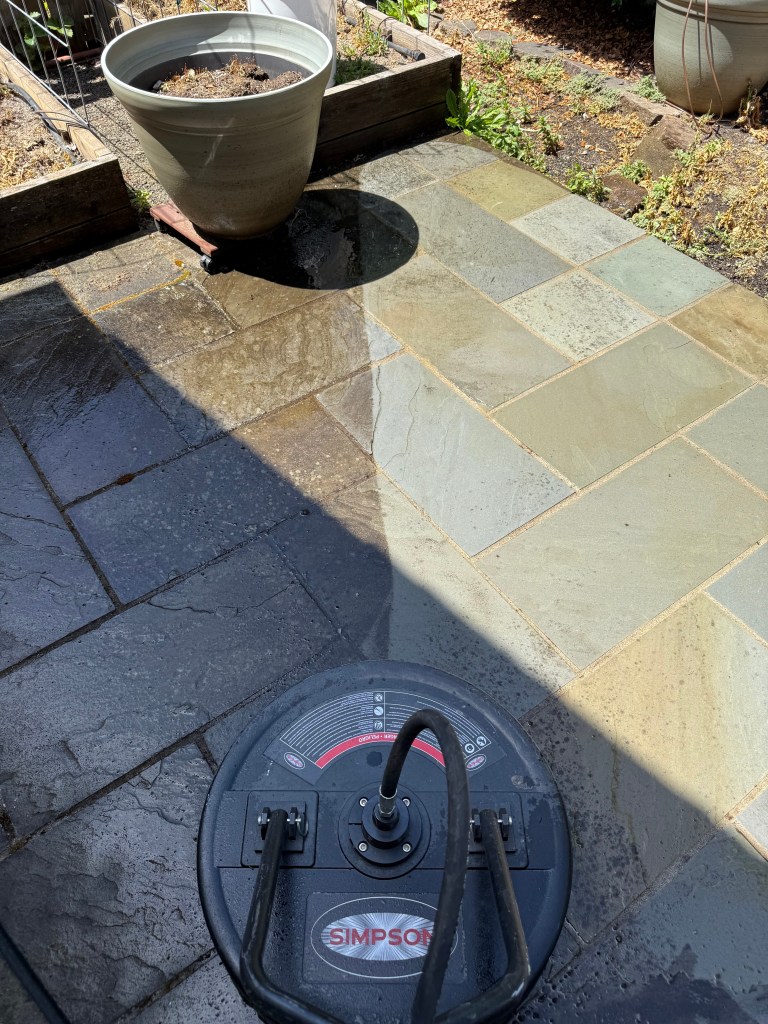
Here is the distinction that matters for Oregon homes: most residential cleaning does not require high-flow water. In addition, algae, mildew, and light moss on driveways, siding, and roofs respond well to cold water combined with proper cleaning chemistry. So for 90% of the work GreenTree does across Corvallis Albany Eugene Philomath and Springfield standard pressure washing delivers identical results to power washing.
But the other 10% is where temperature makes a real difference. Embedded motor oil on garage floors. Furthermore, grease on restaurant dumpster pads in downtown Corvallis and Albany’s Main Street. Moreover, tannin stains from decomposed moss near Timberhill and College Hill. These stains resist cold water because their molecular structure does not break down without heat. As a result, greenTree carries high-flow water capability and deploys it when the stain demands it.
The Three Variables: Temperature, PSI, and Chemistry
Cleaning depends on three variables working together. In particular, increase any one and you can decrease the others. So a power washer at 180 degrees cleans at lower PSI because heat does part of the work. But a cold pressure washer with the right detergent matches a hot unit because chemistry does what heat would otherwise do. So greenTree uses this approach to find the safest effective combination for each surface. Higher temperature means less pressure needed. Better chemistry means less of both.
When Does high-flow water Power Washing Actually Matter in Oregon?
high-flow water matters for three specific stain types in Oregon: petroleum stains (motor oil, hydraulic fluid, diesel), grease and food residue (restaurants, dumpster pads), and deep tannin staining from decomposed moss and leaves. Also, cold water handles everything else: algae, mildew, light moss, dirt, mud, and general buildup.
Petroleum Stains on Garage Floors
Every Oregon garage collects oil drips. Then in Corvallis neighborhoods like Timberhill and Witham Hill, steep driveways concentrate oil at the low point near the garage door. Cold water pushes oil around but does not break it down because oil molecules repel water. But at 180 degrees, oil viscosity drops and detergent can surround and lift it from concrete pores. GreenTree uses high-flow water on oil-stained garage floors, then switches to cold water for the rest of the driveway.
Grease on Commercial Surfaces
Dumpster pads and drive-through lanes in Corvallis, Albany, and Eugene accumulate grease that cold water cannot cut. In addition, restaurant health inspections in Benton County, Linn County, and Lane County check exterior cleanliness. So commercial pressure washing for food service uses high-flow water as default because cold water leaves a grease film that re-attracts dirt within days.

Tannin Staining: Oregon’s Unique Problem
When moss, Douglas fir needles, and Big leaf maple leaves decompose on concrete, they release tannins that soak into the porous surface. Cold water removes the debris but leaves a brown ghost stain. So driveways in College Hill in Corvallis, Fairmount in Eugene, and South Corvallis near the Marys River develop tannin staining that persists after standard cleaning. Furthermore, high-flow water at 150+ degrees with an oxidizing detergent breaks down tannin molecules and restores uniform color.
When Is Cold Water Pressure Washing the Better Choice?
Cold water pressure washing is better for algae, mildew, light moss, mud, and general buildup on concrete, brick, stone, and pavers. It is also safer near plants because high-flow water scalds roots and foliage. Moreover, for most Oregon driveways in ZIP codes 97330, 97321, 97401, 97370, and 97477, cold water with the right detergent produces perfect results at lower cost.
Oregon’s dominant stain is algae biofilm. As a result, that green layer on every driveway from October through May is a living organism that responds to chemistry, not heat. In particular, a proper detergent kills algae at the cellular level. Then pressure removes the dead biofilm. high-flow water adds cost without improving the result because chemistry already did the work. So greenTree defaults to cold water for standard residential pressure washing unless the stain specifically requires heat.
Cold Water Is Safer Near Landscaping
high-flow water at 180 degrees kills plant tissue on contact. So if your Corvallis home has garden beds along the driveway or your Eugene home has native plantings near walkways, cold water adds safety margin. GreenTree pre-wets all vegetation regardless. But cold water is especially important for properties in South Corvallis near the Marys River, Eugene’s Amazon neighborhood, and Philomath homes with native plants.
Cold Water Costs 15 to 25% Less
high-flow water units burn fuel to heat water, adding cost. So power washing a driveway costs 15 to 25% more than cold pressure washing. Also, for stains that respond equally to both, the lower cost option wins. Then greenTree never upsells high-flow water when cold will work. In addition, see our Oregon Cost Guide for pricing.
How Do All Three Methods Relate: Power Wash, Pressure Wash, and Soft Wash?
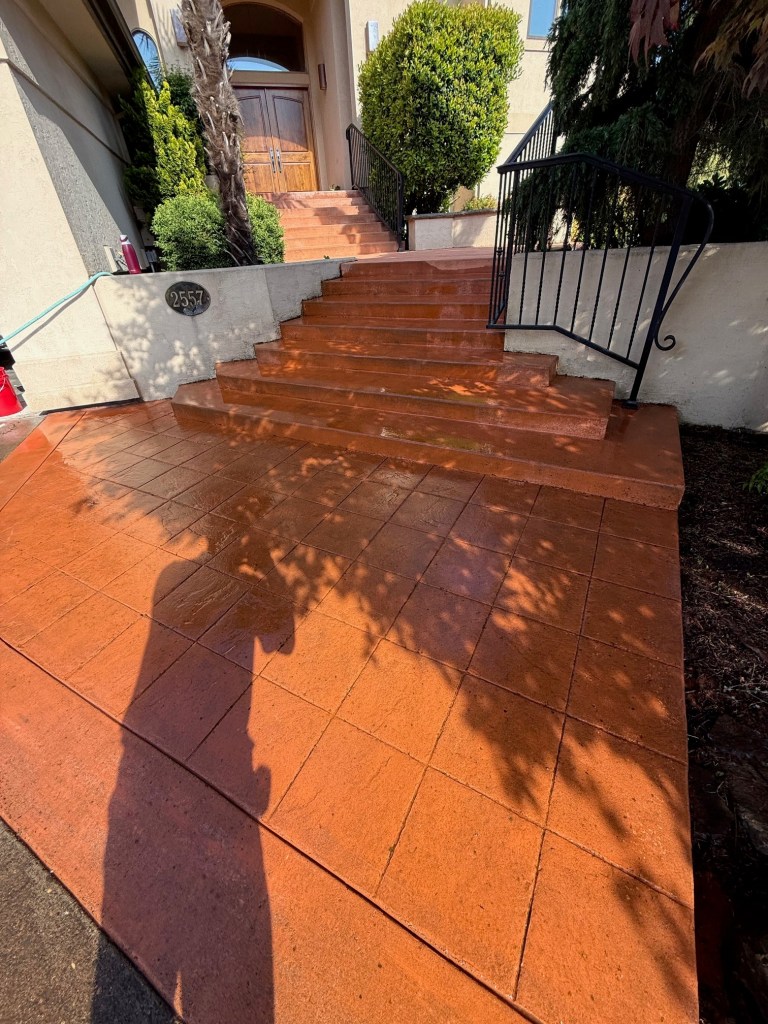
Power washing uses high-flow water at high PSI. Furthermore, pressure washing uses cold water at high PSI. Soft washing uses cold water at low PSI with strong chemistry. Moreover, oregon homes need all three across different surfaces. As a result, greenTree carries all three on a single truck.
| Method | Water Temp | PSI | Best For |
|---|---|---|---|
| Power Wash | 150-200°F | 2,000-4,000 | Oil, grease, tannin |
| Pressure Wash | Ambient | 2,000-4,000 | Algae, mildew, dirt |
| Soft Wash | Ambient | Under 500 | Siding, roofs, paint |
A typical Oregon home needs at least two methods per visit. In particular, the driveway gets pressure washed at 3,500 PSI. Siding gets soft washed at 400 PSI. So if the garage has oil, we use high-flow water for that zone. Bundle services and save up to 10%. Get your free estimate.
Power Washing and Pressure Washing by City in the Willamette Valley
GreenTree provides both power washing and pressure washing across five cities in three counties. Also, the same pricing across Benton County (97330, 97333, 97370), Linn County (97321, 97322), and Lane County (97401-97405, 97477, 97478).
Corvallis (Benton County)
Corvallis homes in Timberhill, College Hill, South Corvallis, and Witham Hill face rain days per year. Algae responds to cold pressure washing. But tannin stains under Douglas fir canopy along Witham Hill Drive and near the Marys River need high-flow water. Corvallis pressure washing starts at $299.
Albany (Linn County)
Albany’s Monteith and Hackleman historic districts have brick with lime mortar needing lower PSI regardless of temperature. Then the Calapooia and Willamette River confluence creates the valley’s highest humidity. Albany pressure washing
Eugene and Springfield (Lane County)
Eugene’s 30% canopy in Fairmount, Amazon, and College Hill creates the heaviest tannin staining in the valley. In addition, more Eugene driveways benefit from high-flow water than any city we serve. Furthermore, springfield’s Gateway and Thurston face twin-river moisture from the McKenzie and Willamette. Eugene | Springfield
Philomath (Benton County)
Philomath gets heavier rain from Coast Range lift. Moreover, douglas fir needle tannins are the dominant stain. As a result, greenTree is 2 miles away with the fastest response in the valley. Philomath pressure washing
Soft Wash vs Pressure Wash Guide | Oregon Cost Guide | Seasonal Guide | About GreenTree
Should You Ask for Power Washing or Pressure Washing When You Call?
It does not matter which term you use when you call GreenTree. In particular, we understand both terms and we carry both capabilities. So call and describe what you need cleaned: driveway, siding, roof, gutters. We will determine the right method (high-flow water, cold water, soft wash) during the free on-site assessment based on your actual surfaces and stain types. So you do not need to be a cleaning expert. That is our job.
The distinction between power washing and pressure washing matters at the technical level but not at the hiring level. So whether you search "power washing Corvallis" or "pressure washing Corvallis," you need the same thing: a professional crew with proper equipment, $2M insurance, and the knowledge to match technique to surface. Also, greenTree provides all of that regardless of which term brought you to this page. Get your free estimate and let us handle the technical decisions.
Call it whatever you want. We will clean it right.
Power Washing vs Pressure Washing, Common Questions
Standard cold pressure washing handles most Oregon driveways. Then high-flow water only needed for embedded oil or deep tannin stains from decomposed moss. GreenTree assesses your stains for free.
high-flow water adds 15 to 25% due to fuel. In addition, greenTree only uses it when the stain requires it. Standard pressure washing starts at $299.
No. Furthermore, concrete handles both hot and cold water at any PSI up to 4,000. Damage risk is on softer surfaces like siding and roofs, which need soft wash.
Yes. Moreover, hot and cold water on every truck. As a result, one crew, one visit, the right method for each stain. In particular, serving all ZIP codes in Benton, Linn, and Lane County.
Not sure which method your stains need? We tell you for free.
Hot or Cold. High PSI or Low. We Match the Method to the Stain.
$2M insured. 5.0 rated. Free estimates.
Technical references: EPA stormwater | OSHA safety
More Resources
Full Service Area Map, every city and ZIP we cover. FAQ, 22 common questions answered. How to Choose a Company, 5 questions to ask before hiring. Power Washing vs Pressure Washing, high-flow water vs cold water explained.